
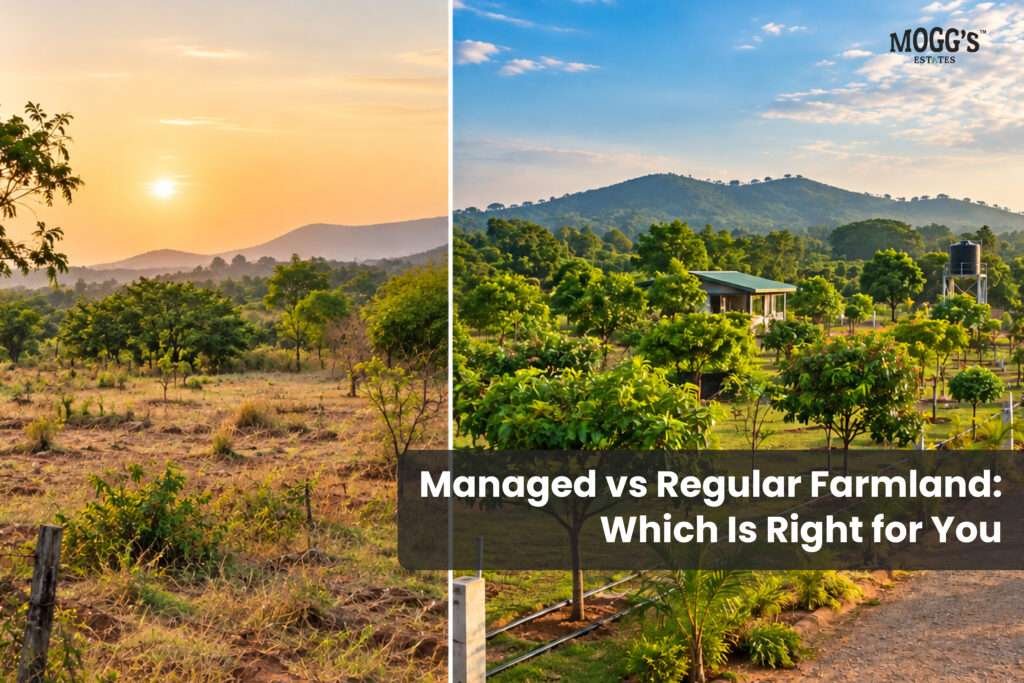
Managed vs regular farmland is the choice between two ways of owning agricultural land. With managed farmland, you own the land while a professional company handles planting, leasing, and reporting for a fee. With regular farmland, you control those decisions yourself, either by farming the land or leasing it to a local operator. Managed farmland trades some control and net income for convenience, while regular farmland offers full control at the cost of time and local expertise.
What Is Regular Farmland?
Regular farmland, sometimes called self-managed or traditional farmland, is land that the owner controls directly. The owner might farm it personally, lease it to a neighbouring farmer for a cash rent or a share of the crop, or hire a local supervisor to oversee operations.
The appeal is control. You choose the crops, set the lease terms, and decide when to sell. Because no management company takes a cut, more of the income stays with you. Many families hold land this way for generations, and it often comes with local relationships and institutional knowledge that are hard to replace.
The drawback is workload. Regular farmland demands an understanding of soil, water, local markets, tenant relationships, insurance, and land taxes. Absentee owners who lack these skills can end up with weak leases, neglected land, or rents below market value.
What Is Managed Farmland?
Managed farmland is built for owners who want agricultural returns without running a farm. A management company typically handles:
- Sourcing and preparing land
- Selecting crops and operators
- Planting, irrigation, and maintenance
- Security and boundary care
- Harvest sales, where the company runs operations directly
- Regular reports to owners
Managed farmland is often sold within a larger development or offered through a fund. Some structures spread investors across several parcels, regions, or crop types, which can reduce dependence on any single property.
The trade-off is cost. Management fees, which may be a percentage of revenue, a fixed annual charge, or a per-acre amount, reduce net returns. Owners also give up control over individual decisions and rely on the manager’s judgment and track record.
Managed vs Regular Farmland: Side-by-Side Comparison
| Factor | Regular Farmland | Managed Farmland |
|---|---|---|
| Control over decisions | Full | Limited to the agreed plan |
| Time commitment | High, or moderate if leased | Low |
| Expertise needed | Local market, leasing, and land knowledge | Evaluating operators and contract terms |
| Ongoing costs | Labour, inputs, taxes, and your own time | Management fees plus your share of costs |
| Diversification | Often concentrated in one parcel | Can be spread across parcels or regions |
| Liquidity | Low, since land sales take months | Varies by structure |
| Best suited for | Hands-on owners and local investors | Passive investors and owners who live far away |
How Returns Compare in Each Model
Farmland returns usually come from two sources. Cash yield is income from leases or crop sales, often expressed as a share of the land’s value. Appreciation is the change in land value over time. Both depend heavily on local conditions, including rainfall, commodity prices, interest rates, and demand for land near cities.
Regular farmland keeps more of the gross income, but the owner bears every cost, including vacancy, poor tenant performance, and deferred maintenance. Managed farmland usually shows a lower net yield after fees. However, professional management can reduce vacancy, improve lease terms, and make the portfolio less dependent on one owner’s skill.
The most useful comparison is net return after all costs. A managed offer with a strong headline figure may deliver less than a well-run self-managed parcel, and the reverse can also be true. Ask for a complete fee schedule and a worked example before comparing.
Risks in Each Model
Neither model is risk-free, and neither reliably protects against inflation or market downturns.
Regular farmland risks include concentration in a single location, drought and weather exposure, poor tenant selection, low liquidity, and the time cost of management.
Managed farmland risks include fee drag, dependence on the operator’s performance, limited control over decisions, lock-in periods in pooled structures, and reduced visibility into individual parcels when you invest through a shared vehicle.
Both models face exposure to commodity price swings, interest rate changes, water availability, and climate. Ask every seller and operator how they plan for these risks.
Which Model Fits Your Goals?
Regular farmland suits you if you live near the land, have agricultural experience or a trusted local operator, want full control, or are looking to keep a family property productive.
Managed farmland suits you if you live far from the land, want passive involvement, prefer a diversified holding, or would rather pay a fee than spend your own time on operations.
Some investors combine both. They keep a core parcel they understand well and add a managed allocation for diversification.
What to Check Before You Commit
For regular farmland, review soil quality, water access and legal water rights, drainage, local cash-rent levels, the tenant’s track record, recent sale prices for comparable parcels, and the title and land-use records.
For managed farmland, review the operator’s track record across different market conditions, the full fee structure including performance fees and pass-through costs, the term and exit options, how results are reported, and whether the operator invests its own capital alongside yours.
Before you pay anything beyond a refundable booking amount, have a qualified property lawyer review title, land records, and every contract. If the land is in India, confirm the current rules on who can buy agricultural land in your state, since many states restrict agricultural purchases by non-farmers.
Final Thoughts
Choosing between managed and regular farmland comes down to how much control you want and how much time you can give. Regular farmland rewards owners who are willing to learn the land and manage it closely. Managed farmland rewards owners who want exposure to agriculture without the daily work, provided they compare fees, documentation, and reporting carefully.
Start with your goals, compare net returns rather than headline figures, and verify the legal and physical details before you commit. If you do this, the right model for your situation will usually be clear.
Frequently Asked Questions
What is the main difference between managed vs regular farmland?
Managed farmland is owned by an investor but operated by a professional company for a fee, so the owner has limited day-to-day control. Regular farmland is run directly by the owner, who farms the land or leases it and makes all decisions.
Is managed farmland better than regular farmland?
Neither is better for everyone. Managed farmland suits passive owners and those seeking diversification. Regular farmland suits owners who want full control and can manage the land themselves or through a trusted operator.
What fees do farmland managers usually charge?
Fees vary and may include a percentage of revenue, an annual or per-acre charge, acquisition fees, and performance fees. Request a full written fee schedule and calculate net returns after all costs.
Does regular farmland produce higher returns than managed farmland?
It can keep more of the gross income because there are no management fees. However, the owner also carries all operating risks and time costs, so the net outcome depends on the owner’s skill and local conditions.
Can I invest in managed farmland with a small budget?
Some managed structures, including pooled funds and fractional plots, allow smaller entry amounts than buying a full parcel. Check minimums, lock-in periods, and exit terms before committing.
Is farmland a good hedge against inflation?
Farmland has sometimes moved with inflation through rents and crop prices, but the relationship is inconsistent. It should not be treated as a guaranteed hedge.