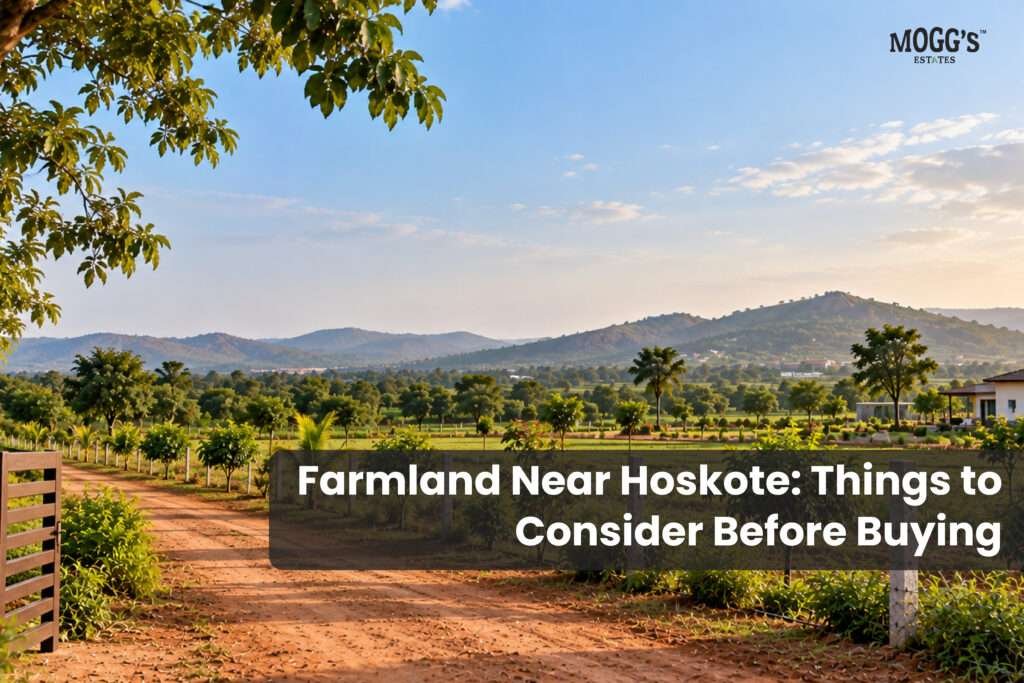
Farmland near Hoskote has become a serious option for buyers who want open land, a working farm or a long-term holding without paying the prices of the airport corridor. Hoskote sits on the eastern side of Bengaluru Rural district, close enough to the city for regular visits and far enough to offer larger plots for the same budget. Listings for farm land for sale near Hoskote appear every week, and many of them look attractive. Some plots have clean records, dependable water and clear access. Others carry unresolved inheritance claims, unclear boundaries or classifications that block the use the buyer had in mind.
Anyone considering agricultural land near Bangalore should understand that the value of a plot depends on more than its appearance. Its title, revenue records, water supply, access and legal status decide whether it will serve your plans. This guide explains what to check before you buy farmland near Hoskote, how the purchase process works, what it costs and the questions buyers ask most often.
Why Buyers Are Looking at Farmland Near Hoskote
Hoskote lies to the east of Bengaluru, and the drive from central parts of the city typically takes about an hour, depending on traffic and the route. That distance is central to its appeal. A buyer can reach the land on a weekend, check on a farm manager or inspect the work done, yet still find open fields and a rural setting that the inner suburbs no longer offer.
The area’s connection to the wider region also draws interest. Hoskote is part of the broader Bengaluru metropolitan landscape, and its position on the eastern approaches to the city has made it a frequent point of comparison for buyers who first looked at the airport side and found prices out of reach. Many of them now compare farmland near Hoskote with plots further north and south, asking which offers the best combination of cost, access and potential.
Connectivity matters as well. Road improvements on the eastern routes have shortened travel for many commuters, and that makes a property usable for more people. Transport projects, however, often shift their timelines. Confirm the status of any road or infrastructure project with the relevant authority before you make a decision based on it.
Understanding the Land Before You Look at Prices
Agricultural land is recorded in a particular way, and that record determines much of its value. Before you compare prices, understand what the revenue records say about the plot. The classification tells you whether the land is agricultural, whether it has been converted and what uses are permitted. A plot that looks like a farm may sit in a category that does not allow the building you plan.
Karnataka’s rules also govern who may buy agricultural land and how much one household may hold. These rules have changed over time and can apply differently depending on the buyer’s status and existing holdings. Non-agriculturist buyers in particular should confirm their eligibility with a qualified property lawyer before they negotiate. Eligibility is a separate question from whether the land suits your plan, so check both.
Finally, consider the land’s location within Hoskote taluk. Plots near the town, along main roads or close to the edge of planned development areas may face different pressures from parcels deeper in the countryside. Local revenue and planning authorities can confirm the current status of a specific survey number.
Documents to Verify Before Buying Farmland Near Hoskote
A clean title is the foundation of any safe purchase. For farmland near Hoskote, ask the seller for the following documents and have an independent advocate verify each one with the issuing office.
RTC (Record of Rights, Tenancy and Crops), also called Pahani: The RTC shows the recorded owner, the land’s classification, the crops entered and any tenancy rights. It is available through the Bhoomi system or the taluk revenue office. The name on the RTC should match the seller and the sale deed. Any mismatch needs a satisfactory written explanation before you move forward.
Mutation records: Each sale and inheritance should be reflected in the revenue records through a mutation entry. Missing mutations often signal incomplete transfers or family claims that have not been settled.
Encumbrance Certificate (EC): The EC, issued by the Sub-Registrar’s office, lists registered transactions affecting the property over a period. It reveals whether the land has been mortgaged, sold or otherwise encumbered. Your lawyer should advise how many years the certificate must cover, based on the plot’s history.
Chain of title: Earlier sale deeds and succession documents should form an unbroken chain of ownership. Gaps, joint family claims or unclear inheritance require careful investigation. Ask whether every co-owner has signed or consented to the sale.
Khata and tax receipts: The Khata and property tax records should be consistent with the RTC and the sale deed. Differences in survey numbers, extents or owner names are warning signs.
Survey sketch and boundaries: Obtain the survey sketch for the parcel. If the boundaries are unclear or the plot has been subdivided, arrange demarcation through the Taluk Survey Department. Encroachment is a common source of rural disputes, so do not rely on the seller’s word about where the edges lie.
Planning status: Check whether the land falls within a notified development area, a master plan or a project corridor. Such designations can restrict use, delay approvals or change the land’s value over time.
Treat missing documents as a serious warning sign. A seller who cannot produce a complete set of records should explain the gap in writing, and no money should change hands until the issue is resolved to your lawyer’s satisfaction.
Water, Soil and Access: The Physical Checks
Documents show what you own. Inspection shows what you can do with it. For farmland near Hoskote, three physical factors deserve close attention.
Water. Water often decides whether a plot is productive. Identify the source, whether it is a borewell, an open well, a canal, a tank or a rainwater system. Ask how deep the water table lies and how it changes between seasons, especially in dry years. Neighbouring farmers are the best source for this information, because they have lived with the plot’s water through drought and monsoon. Confirm that any existing borewell is legally permitted and registered where required, and check whether a new one can be drilled before you rely on it.
Soil. Soil quality shapes your crop plan and your budget for inputs. Have it tested through a government agricultural office or an accredited laboratory before you commit. Red soils drain well but often need organic matter and careful irrigation. Black soils hold moisture but can become waterlogged after heavy rain. Ask whether the land has been cultivated in recent years, and what was grown, since that history reveals a great deal.
Access and power. A plot needs a clear, legally recorded access road. A landlocked parcel reached only through a neighbour’s land may be impractical even when its title is clean. Confirm the right of way in writing. Check the distance to the nearest power point and whether an agricultural connection can be obtained for pumps, along with the approval process and its timeline
Costs You Should Budget For
The price of farm land for sale near Hoskote depends on distance from the town, road frontage, water access, soil quality and nearby development. Plots along main roads and close to Hoskote town usually cost more than interior parcels. Obtain quotes from several brokers, then compare them with recent registered transactions, which can be checked through public records. A single asking price tells you very little on its own.
Beyond the purchase price, budget for stamp duty and registration charges, which the state sets and calculates on the property value. Add legal fees for due diligence and deed preparation, survey and demarcation charges, mutation fees and brokerage if you use an agent. If you plan to drill a borewell, install a pump, fence the land or build a structure, include those costs as well. Where a non-agricultural use requires conversion, add the conversion fees and the cost of approvals, plus a buffer for delay.
Ongoing costs include labour, seeds, fertiliser, irrigation, pest control, fencing repairs and property tax. Keep a reserve for at least one difficult season, since farm income is seasonal and uncertain. A plot that looks affordable at purchase can become expensive to hold if its water or access needs major investment.
Areas Within Hoskote Taluk and the Surrounding Region
Buyers exploring farmland near Hoskote often compare several locations, and the right choice depends on what they want from the land.
Plots close to Hoskote town generally offer better roads, electricity and services, but they carry higher prices and more pressure for conversion. Villages further from the town tend to be cheaper and quieter, which suits cultivation and long-term holding. Land near established farming communities benefits from local knowledge about water, crop prices and buyers for produce. Parcels along major roads are convenient but may be exposed to commercial demand and to conversion applications from developers.
Whichever area you consider, local revenue and legal advice matters more than general market commentary. Each village keeps its own records and follows its own practices, so a plot in one village can differ sharply from a plot a few kilometres away.
Buying Process: Step by Step
A structured process protects you from most avoidable losses.
Step 1: Define your purpose. A vegetable grower, a weekend buyer and a long-term investor each need different land. Decide what you want to do before you start looking.
Step 2: Confirm eligibility. Ask a qualified advocate whether you can legally buy agricultural land under current rules, given your status and existing holdings.
Step 3: Set a full budget. Include the price, stamp duty, registration, legal fees, survey charges, mutation fees and a reserve for water, fencing and maintenance.
Step 4: Shortlist and visit. Walk each plot in different seasons and speak with local farmers and neighbours about its history, water and disputes.
Step 5: Complete due diligence. Hire an independent advocate, not one recommended only by the seller. The advocate should review every record listed above and provide written findings.
Step 6: Sign an agreement of sale. The agreement should state the price, the payment schedule, the possession date and what happens if a title defect surfaces later. Pay a token amount only after the title is cleared.
Step 7: Register and mutate. Register the sale deed at the Sub-Registrar’s office, pay stamp duty and fees, and apply for mutation so the revenue records show your ownership. Keep every acknowledgment.
Step 8: Take possession. Inspect the land on the day you take over, record its condition with dated photographs, and secure the boundaries.
Common Mistakes Buyers Make
The most frequent error is trusting verbal assurances about land use, water or future approvals. Get every important statement in writing from the seller, the broker or the revenue authority. Another mistake is buying without a physical visit, since listings and maps do not reveal encroachments, poor drainage or access disputes.
Some buyers pay the full price before registration, or buy from someone who is not the registered owner. Others assume that land near a growing area will automatically be approved for building or conversion. Many also underestimate how long mutation, conversion and dispute resolution can take, so they run short of funds or patience. Build a buffer into your timeline and your budget.
Tips for a Safer Purchase
Work with a lawyer who regularly handles agricultural land in Bengaluru Rural district. Verify each document directly with the issuing office rather than relying on copies. Compare two or three plots on the same checklist, so that the choice rests on facts rather than on the most persuasive broker. Visit the land in more than one season and talk to several neighbours.
If you are considering a managed farmland arrangement, review the full contract and the operator’s track record before you pay, and confirm that the title remains in your name. Keep every transaction in writing, and do not commit money you may need soon, since farmland is far less liquid than residential property.
Final Thoughts
Farmland near Hoskote offers open land, real agricultural potential and a practical distance from Bengaluru. For buyers who want rural space without the prices of the airport corridor, it deserves close attention. The same qualities that make the area appealing also mean that careful checking matters more than speed.
The buyers who do well treat each purchase as a legal and agricultural decision before it becomes a property deal. Verify the title and the revenue records, confirm your eligibility and the land’s permitted use, test the water and soil, and read every agreement closely. With that preparation, farm land for sale near Hoskote can become a productive and secure part of your long-term plans.
Frequently Asked Questions
Is farmland near Hoskote a good investment?
It can be, particularly for patient buyers who complete proper legal checks and accept that farmland is less liquid than residential property. Returns depend on the specific plot, its classification, its productivity and future infrastructure. Prices can fall as well as rise, so consult a financial advisor before investing.
Can I buy farm land for sale near Hoskote if I am not a farmer?
Possibly, but eligibility depends on Karnataka’s current rules on agricultural land purchases, including the buyer’s status and existing holdings. Confirm your eligibility with a qualified advocate before signing any agreement.
Which documents should I check for agricultural land near Bangalore?
At minimum, check the sale deed, earlier deeds covering the chain of title, the RTC (Pahani), mutation records, the Khata certificate, tax receipts, the survey sketch and an Encumbrance Certificate. Verify each one with the issuing office.
How do I find out the classification of a plot near Hoskote?
Obtain the RTC through the Bhoomi system or the taluk revenue office, using the survey number. Your lawyer can also confirm whether any conversion has been applied for or approved.
How much does farm land for sale near Hoskote cost?
Prices vary with location, road access, water, soil and nearby development. Plots near Hoskote town and main roads usually cost more. Compare broker quotes with recent registered transactions before you negotiate.
What should I do if the seller cannot produce all the documents?
Treat missing records as a serious warning sign. Ask the seller to explain the gap in writing, have your lawyer investigate, and do not pay any money until the records are obtained or the issue is resolved to your lawyer’s satisfaction.