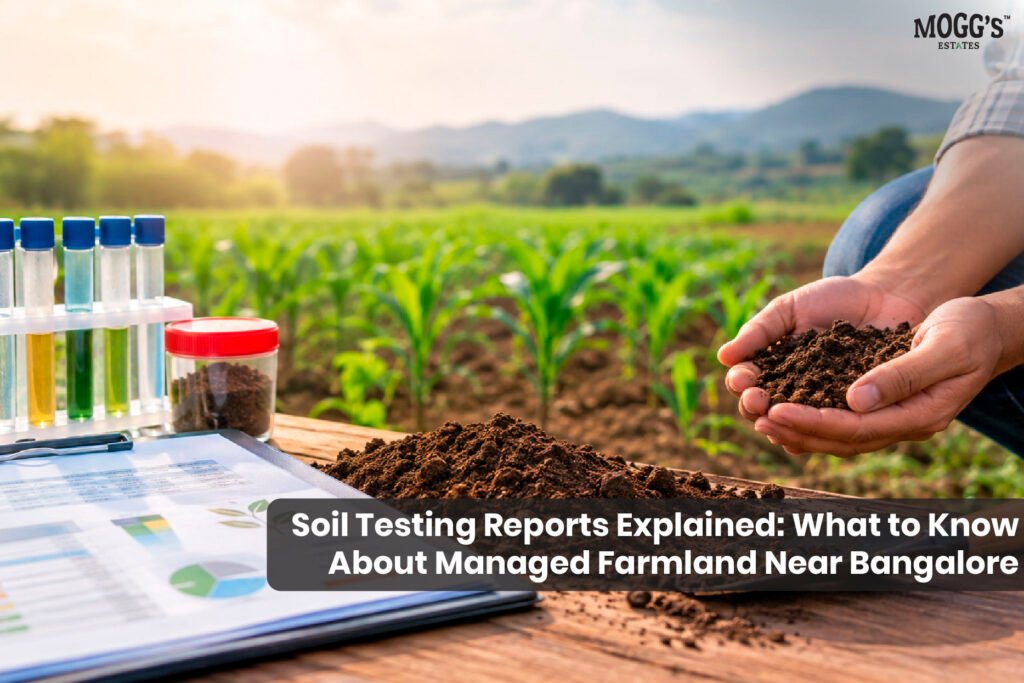
Soil testing reports help us understand what lies beneath the surface of agricultural land. They reveal important details about soil nutrients, pH levels, and overall soil conditions. For people exploring managed farmland near Bangalore, this information offers a practical way to learn about agricultural land and its care.
Healthy soil supports strong plant growth. It also helps farmers plan irrigation, select suitable crops, and manage nutrients. However, soil conditions differ from one property to another. That is why testing matters before making important agricultural decisions.
In this blog, we explain how to read a soil testing report, why soil health matters, and how testing supports professional farmland management.
What Is a Soil Testing Report?
A soil testing report is a document that shows the results of laboratory analysis. Farmers and agricultural experts use these results to understand the condition of the soil.
A typical report may include:
- Soil pH
- Electrical conductivity
- Organic carbon
- Nitrogen, phosphorus, and potassium
- Secondary nutrients
- Micronutrients
Each result provides information about a specific soil characteristic. Together, these details help agricultural professionals plan suitable management practices.
For anyone exploring managed farmland, soil testing provides useful information about the agricultural side of land ownership. It also helps explain why different crops may require different soil conditions.
However, a soil report does not guarantee crop yields. Weather, water availability, crop selection, and farm maintenance also affect agricultural results.
Why Soil Testing Matters for Managed Farmland Near Bangalore
Bangalore and its surrounding regions include agricultural properties with different soil types and growing conditions. Rainfall, irrigation, land use, and farming methods can influence soil health.
Therefore, farm management should consider the specific needs of each property.
Soil testing helps agricultural teams:
- Identify nutrient deficiencies.
- Understand soil acidity or alkalinity.
- Plan crop cultivation.
- Improve nutrient management.
- Monitor soil conditions over time.
For people researching farmland, these factors can provide a better understanding of how agricultural land is maintained.
Professional farm management involves more than planting crops. It also includes monitoring soil, managing water, and responding to changing agricultural requirements.
Understanding Soil pH
Soil pH measures whether soil is acidic or alkaline. It generally ranges from 0 to 14. A pH of 7 is considered neutral.
The pH scale includes:
- Below 7: Acidic soil
- Around 7: Neutral soil
- Above 7: Alkaline soil
Different crops grow well within different pH ranges. Soil pH also affects the availability of certain nutrients.
For example, a soil may contain nutrients that plants cannot easily absorb under unsuitable pH conditions. A soil test helps identify this possibility.
Agricultural experts can then recommend suitable management practices based on the crop and soil requirements. These recommendations may include adjustments to soil amendments or cultivation methods.
The correct approach depends on the laboratory results and the specific agricultural conditions.
What Does Electrical Conductivity Tell Us?
Electrical conductivity, or EC, measures the ability of a soil solution to conduct electricity. It is commonly used to assess soluble salt levels.
High salt concentrations can affect how plants absorb water. However, EC results must be interpreted carefully.
The meaning of an EC reading depends on the testing method, soil conditions, and crop tolerance. A single number cannot explain every aspect of soil health.
Regular monitoring can help farm managers identify potential salinity concerns. It also supports better decisions about irrigation and soil care.
This is particularly relevant when agricultural land depends on managed water resources.
Understanding Organic Carbon in Soil
Organic carbon is an important indicator of soil organic matter. It relates to several processes that support soil health.
Organic matter can help improve:
- Soil structure
- Moisture retention
- Biological activity
- Nutrient cycling
However, organic carbon is only one part of a complete soil assessment.
Farm management practices such as compost application, crop residue management, and suitable planting methods may support soil health. The right practice depends on the existing soil condition.
Testing provides a starting point. Ongoing observation and professional advice help determine what the soil needs next.
Primary Nutrients in a Soil Testing Report
Plants need essential nutrients to grow. Soil testing reports often include three primary nutrients: nitrogen, phosphorus, and potassium.
Nitrogen
Nitrogen supports leaf development and plant growth. Plants require it in suitable amounts throughout their growth cycle.
However, too much nitrogen can also create management challenges. Application decisions should depend on soil results and crop requirements.
Phosphorus
Phosphorus supports root development and important energy-related processes in plants.
The available amount depends on soil characteristics and the testing method. A report helps experts determine whether further nutrient management is needed.
Potassium
Potassium supports water regulation and several functions related to plant development.
The correct potassium level varies according to the crop and soil conditions. Testing helps guide appropriate decisions.
In every case, nutrient recommendations should come from reliable soil interpretation rather than guesswork.
Secondary Nutrients and Micronutrients
Soil testing reports may also include secondary nutrients and micronutrients.
Secondary nutrients include:
- Calcium
- Magnesium
- Sulfur
Micronutrients include:
- Zinc
- Iron
- Boron
- Manganese
- Copper
Plants require micronutrients in smaller quantities. Even so, they play important roles in healthy growth.
A deficiency does not always mean that a nutrient should be added immediately. Soil conditions, crop requirements, and professional recommendations must be considered first.
This approach helps avoid unnecessary fertilizer use and supports responsible farm management.
Soil Testing and Farmland Ownership
Soil testing can be useful for people who want to understand agricultural land before making ownership decisions.
For those researching farmland ownership, a soil report offers information about the land’s tested characteristics. It can also support conversations with agricultural experts and property management teams.
People exploring agricultural land ownership should consider additional factors. These include land documentation, water availability, permitted use, access, and management arrangements.
Likewise, farm ownership involves more than owning land. It may also include decisions about cultivation, maintenance, and agricultural operations.
If you want to own farmland or own agricultural land, understanding these responsibilities can help you make more informed plans.
A soil report is useful. However, it should be reviewed alongside other property information.
Soil Reports for Farm Plots and Premium Farmland
Different landowners may have different goals. Some may focus on cultivation. Others may be interested in nature, recreation, or long-term ownership.
People exploring private farmland and premium farmland may want to understand the land’s agricultural characteristics. Soil testing can provide relevant information about nutrient levels and soil conditions.
Similarly, those considering farm plots or agricultural plots should learn about the property’s permitted use and management arrangements.
For anyone researching farm plots for investment, it is important to separate agricultural information from financial expectations. Soil quality alone does not guarantee investment returns or future land appreciation.
A well-informed decision considers both the land and the responsibilities associated with ownership.
Soil Testing for Weekend Farmland
Farmland can also support outdoor experiences and time away from busy city life.
People interested in weekend farmland or a weekend farm may want to know how the property is maintained between visits.
A farm management plan can explain how agricultural activities and routine maintenance are organized. The exact services depend on the property and its management agreement.
Soil testing adds another layer of understanding. It helps explain the agricultural conditions that support planting and ongoing land care.
A weekend property may offer lifestyle benefits. Still, agricultural productivity depends on soil, water, weather, and suitable management.
Soil Health and Sustainable Farmland
Soil health is closely connected to responsible agricultural practices. Good soil management considers nutrient balance, water use, and the long-term needs of the land.
People interested in a farm lifestyle may enjoy learning how crops grow and how agricultural teams care for the soil.
For those exploring rural lifestyle investment, it is important to consider lifestyle preferences separately from financial outcomes. Ownership costs, documentation, and management responsibilities all matter.
The idea of a nature investment may appeal to people who value natural surroundings. However, the environmental condition of a property depends on its actual land-use practices and ongoing care.
Similarly, sustainable living farmland can involve responsible water use, soil conservation, and suitable agricultural planning.
Sustainability is a long-term process. It requires consistent attention rather than a single soil test.
How Often Should Soil Be Tested?
The ideal testing frequency depends on the crop, soil type, farming practices, and local conditions.
Agricultural professionals may recommend soil testing:
- Before establishing new crops.
- When plants show unusual growth.
- After major changes in cultivation.
- During nutrient management planning.
- At regular intervals for monitoring.
Testing at suitable intervals helps track changes in soil conditions. However, results from different laboratories may use different methods and reference ranges.
For this reason, reports should be compared carefully. Professional interpretation helps ensure that the information is used correctly.
Common Mistakes When Reading Soil Reports
A soil testing report provides useful information. However, it must be interpreted in context.
Here are five common mistakes to avoid.
1. Looking at only one nutrient
Soil health depends on several factors. One nutrient value cannot explain the complete condition of the soil.
2. Ignoring crop requirements
Every crop has different nutrient and growing needs. Recommendations should match the selected crop.
3. Applying fertilizer without advice
Unnecessary applications may affect soil and plant health. Use laboratory recommendations and qualified agricultural guidance.
4. Treating the report as a guarantee
Soil test results do not guarantee crop yields, income, or investment returns.
5. Overlooking water management
Irrigation, drainage, and rainfall also influence agricultural performance. Soil testing should form part of a wider farm management plan.
Making Informed Decisions About Farmland
Understanding soil testing reports helps people learn more about agricultural land and its management.
For those exploring managed farmland near Bangalore, soil testing provides useful information about nutrient levels and soil conditions. It also shows why professional agricultural planning matters.
At Mogg’s Estates, the concept of managed farmland connects land ownership with ongoing agricultural management. Soil-related decisions should be guided by appropriate testing, crop requirements, and qualified agricultural expertise.
Whether you are researching farmland ownership, exploring a farm lifestyle, or learning about sustainable agriculture, understanding soil is an important step.
Healthy farmland begins with informed care. And every soil testing report offers an opportunity to understand the land a little better.