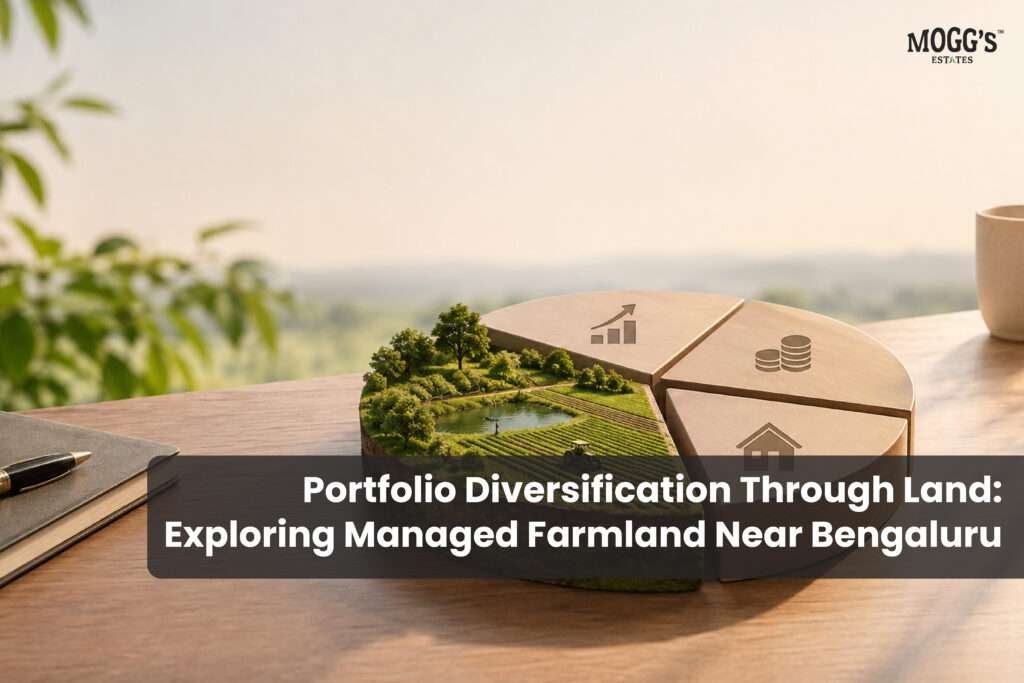
A diversified portfolio is not built by putting everything into one type of investment. It is about understanding different asset classes and deciding how each one fits into your broader financial plan. Portfolio Diversification Through Land offers a way to consider a tangible asset alongside financial investments such as stocks, mutual funds, bonds and other assets.
For people exploring Managed Farmland Near Bengaluru, agricultural land brings another dimension to the idea of diversification. It combines physical ownership with agriculture, land management and long-term stewardship.
But land is not a shortcut to guaranteed returns. Like every asset, it has its own risks, costs and limitations. The important question is how farmland fits into your overall portfolio and whether the particular property meets your requirements.
What Does Portfolio Diversification Through Land Mean?
Portfolio Diversification Through Land means including land as one component of a broader investment portfolio.
An investor may already have exposure to financial markets, residential property, commercial assets or other investments. Agricultural land can represent another physical asset within that mix.
Land is different from many financial assets because it is tangible and location-specific. Its characteristics depend heavily on where it is located, how it is used, its documentation, accessibility and surrounding development.
However, buying another property does not automatically mean a portfolio is diversified. If most of your existing investments are already concentrated in real estate, another land investment could increase that concentration.
Therefore, the focus should not simply be on owning land. It should be on understanding how land fits into your existing asset allocation.
Why Consider Land as Part of a Portfolio?
Land has a physical presence that makes it different from investments represented through shares, units or securities.
Agricultural land can also have an active purpose. When properly developed and maintained, it can support cultivation, trees and other agricultural activities.
For some investors, this combination of tangible ownership and agricultural use is an important consideration.
At the same time, land comes with practical factors that should not be overlooked:
- Land can be less liquid than market-linked investments.
- Selling property can take time.
- Location can have a major influence on demand and value.
- Ownership involves legal and documentation checks.
- Agricultural land requires ongoing management.
- Farming can be affected by weather, water availability and crop conditions.
This makes land an asset that requires careful evaluation rather than assumptions about future returns.
Managed Farmland Near Bengaluru: More Than Just Ownership
Buying agricultural land is only the beginning. A farm needs regular attention long after the purchase is completed.
Crops need monitoring. Trees require pruning and maintenance. Irrigation systems need supervision. Weeds and pests need to be observed, while fencing, pathways and other infrastructure may also require upkeep.
For someone living in Bengaluru, managing all these activities personally may not always be practical.
This is where Managed Farmland Near Bengaluru becomes relevant.
A managed farmland model generally involves a professional team handling agreed agricultural and maintenance activities on behalf of the landowners. The exact services vary by project, so buyers should always understand the management structure before making a decision.
The key difference is simple: the owner owns the land, while professional teams take responsibility for the farm activities covered under the management arrangement.
What Is a Managed Farm?
A Managed Farm is agricultural land supported by an organised system for farming and ongoing maintenance.
Instead of the owner arranging every farm activity independently, management teams may coordinate tasks such as:
- Crop and tree maintenance
- Irrigation
- Weed control
- Pest monitoring
- Pruning
- Soil-related activities
- Farm infrastructure maintenance
- General property upkeep
This can be particularly useful for owners who live away from their farmland or cannot visit frequently.
However, professional management does not remove the natural uncertainties of agriculture. Weather, crop health, water availability and other factors can still influence farm operations.
Managed Agricultural Land Requires Consistent Care
Managed Agricultural Land is not simply land that looks green during a site visit. Agricultural property changes continuously.
Different seasons can bring different farming requirements. Water needs may change. Crops may move through different growth stages. Trees may require pruning, and soil conditions may need attention.
This is why Managed Farming focuses on ongoing agricultural activity rather than occasional maintenance.
A professional team can plan and monitor farm activities according to the requirements of the land. This creates a more structured approach to ownership.
Why Professional Farm Management Matters
A farm does not take a day off.
It continues to grow and requires attention even when the owner is travelling, working or unable to visit the property.
This is where Professional Farm Management can play an important role.
Depending on the project, professional teams may coordinate:
- Crop and tree monitoring
- Irrigation and water management
- Weed control
- Pest observation
- Pruning and seasonal activities
- Soil-related maintenance
- Farm infrastructure upkeep
- General property supervision
The purpose of management is to provide consistent care and coordination. It should not be presented as a guarantee of agricultural income, appreciation or ROI.
What Should You Check Before Choosing Fully Managed Farmland?
The term Fully Managed Farmland can mean different things from one project to another.
Before purchasing, understand exactly what is included in the management arrangement.
Ask questions such as:
- Who will manage the farm?
- What services are included?
- What are the management and maintenance charges?
- How frequently is the property monitored?
- How is irrigation managed?
- Who handles agricultural workers?
- How are crop or tree-related problems addressed?
- How are owners updated?
- Which services may involve additional costs?
A Fully Managed Farm should have clearly defined responsibilities. Reading the management agreement carefully can help avoid misunderstandings later.
Farm Management Services and Long-Term Ownership
Farm Management Services can bring several agricultural responsibilities under one organised system.
Instead of an owner separately coordinating workers, irrigation, crop care and maintenance, a professional team may manage these activities as part of its service structure.
Similarly, Farmland Management Services can cover broader property maintenance along with agricultural operations, depending on the project.
For city-based owners, this can make farmland ownership more practical because regular farm responsibilities do not depend entirely on the owner’s physical presence.
Location Still Matters
Professional management cannot compensate for poor due diligence.
When evaluating Managed Farmland Near Bengaluru, location remains an important factor.
Consider:
- Accessibility from Bengaluru
- Road connectivity
- Surrounding development
- Nearby infrastructure
- Agricultural suitability
- Water availability
- Local conditions
- Long-term usability
A property should be evaluated beyond its appearance during a site visit. Understanding its location and surrounding context is an important part of the decision-making process.
Do Not Overlook Land Documentation
Before considering Agricultural Land Investment, buyers should understand the legal and ownership aspects of the property.
Review the relevant Land Documents and verify ownership and title information through appropriate due diligence.
Depending on the property, records such as the Encumbrance Certificate, RTC and mutation records may also need to be examined.
A Property Title Search and appropriate Land Title Verification can provide important information about ownership and the property’s legal history.
Independent professional advice is valuable when reviewing property documentation.
Can Land Really Diversify a Portfolio?
Land can represent another asset category within a broader portfolio, but its suitability depends on the individual investor.
For example, someone with substantial exposure to financial assets may view agricultural land differently from someone whose existing wealth is already concentrated in property.
Other factors also matter:
- How long you can hold the asset
- Whether you need liquidity
- Your existing real estate exposure
- Your financial objectives
- Your ability to absorb potential losses
- Ongoing ownership costs
This is why Managed Farm Investment should be considered as part of an overall financial plan rather than in isolation.
From Managed Agriculture to End-to-End Farm Management
A structured Managed Agriculture model can bring different farming responsibilities together under professional supervision.
Agricultural Management Services may cover activities related to cultivation, crop care, irrigation and farm maintenance. For broader support, End-to-End Farm Management can coordinate multiple operational requirements through one management system.
For someone considering a Managed Agricultural Property, understanding these services can be just as important as understanding the land itself.
Mogg’s Estates follows a professionally managed farmland approach, with agricultural properties developed and maintained through professional farm management.
A Simple Checklist Before Adding Land to Your Portfolio
Before purchasing agricultural land, consider three areas.
The Land
Check the location, accessibility, agricultural characteristics, infrastructure and documentation.
The Management
Understand who manages the property, what services are included and what ongoing costs apply.
The Investment
Consider your investment horizon, liquidity requirements, existing asset allocation and risk tolerance.
This approach helps you assess the complete opportunity instead of focusing only on the purchase price or appearance of the property.
Land Is One Piece of a Bigger Financial Picture
Portfolio Diversification Through Land is ultimately about understanding whether a tangible asset has a suitable place within your wider financial strategy.
For people considering Managed Farmland Near Bengaluru, the decision involves more than purchasing agricultural land. Location, documentation, farming practices, management services, ongoing costs, liquidity and personal financial goals all deserve attention.
A professionally managed farm can make the operational side of ownership more structured. Yet professional management cannot guarantee returns or eliminate the risks associated with agriculture and real estate.
The better approach is to look at the complete picture: understand the land, understand the management, review the documents and consider how the property fits into your existing portfolio.
When land is evaluated with that level of care, it becomes easier to understand its role—not as the entire investment strategy, but as one possible component of a diversified portfolio.