Introduction
Owning farmland is about much more than possessing a piece of land. For many families, it represents years of hard work, financial discipline, and a vision that extends well beyond one generation. Unlike many other investments, farmland often carries both emotional and financial significance, making it one of the most meaningful assets a family can own.
Yet, while investors spend considerable time researching the right property, understanding market trends, and planning for long-term appreciation, one equally important aspect is frequently overlooked—estate planning.
Estate planning is not only for large business owners or ultra-high-net-worth individuals. It is a practical step that helps ensure your farmland is transferred according to your wishes, reduces uncertainty for your loved ones, and preserves the value of your investment for years to come.
As managed farmland continues to gain popularity among professionals, entrepreneurs, and NRI investors, understanding how to protect these assets has become more important than ever.
Why Estate Planning Matters for Farm Owners
Every investment is made with the hope that it will create long-term value.
Farmland is no exception.
However, unlike financial assets that can often be divided or transferred digitally, agricultural land requires careful legal planning.
Without proper documentation, farmland can become the subject of inheritance disputes, delays in ownership transfer, or legal complications that affect future generations.
Estate planning provides clarity by documenting ownership intentions and ensuring that your agricultural assets are managed according to your wishes.
For families, it offers peace of mind.
For investors, it protects years of careful financial planning.
Farmland Is More Than Just Real Estate
One of the reasons estate planning is especially important for farm owners is that farmland behaves differently from many other assets.
It is a productive asset.
It appreciates over time.
It supports sustainable land use.
It has the potential to become a lasting family legacy.
This combination makes farmland one of the few investments that can provide financial value while also representing something deeply personal.
Estate Planning Helps Preserve Wealth
Many investors focus on building wealth.
Fewer spend time planning how that wealth will be transferred.
Estate planning ensures that ownership remains organised and legally documented.
For farmland owners, this may include:
- Preparing a legally valid will.
- Clearly identifying beneficiaries.
- Maintaining updated ownership records.
- Keeping land documentation organised.
- Reviewing succession plans periodically.
These simple steps can help minimise uncertainty in the future.
The Role of Managed Farmland in Long-Term Planning
Modern investors increasingly prefer Managed Farmland because it combines land ownership with professional agricultural management.
Unlike traditional farmland ownership, managed farmland allows investors to own agricultural land while experienced teams oversee plantation management, irrigation, maintenance, and day-to-day operations.
For families planning long-term wealth creation, managed farmland offers another advantage—it simplifies ownership while allowing the asset to continue being professionally maintained, even when the owner is not actively involved.
If you’re considering this investment model, explore our guide on Benefits of Investing in Farmland to understand why agricultural assets are becoming an increasingly important part of diversified portfolios.
Planning Beyond One Generation
One of the most overlooked aspects of investing is succession planning.
Many successful investments lose value not because they were poor investments, but because ownership transitions were never properly planned.
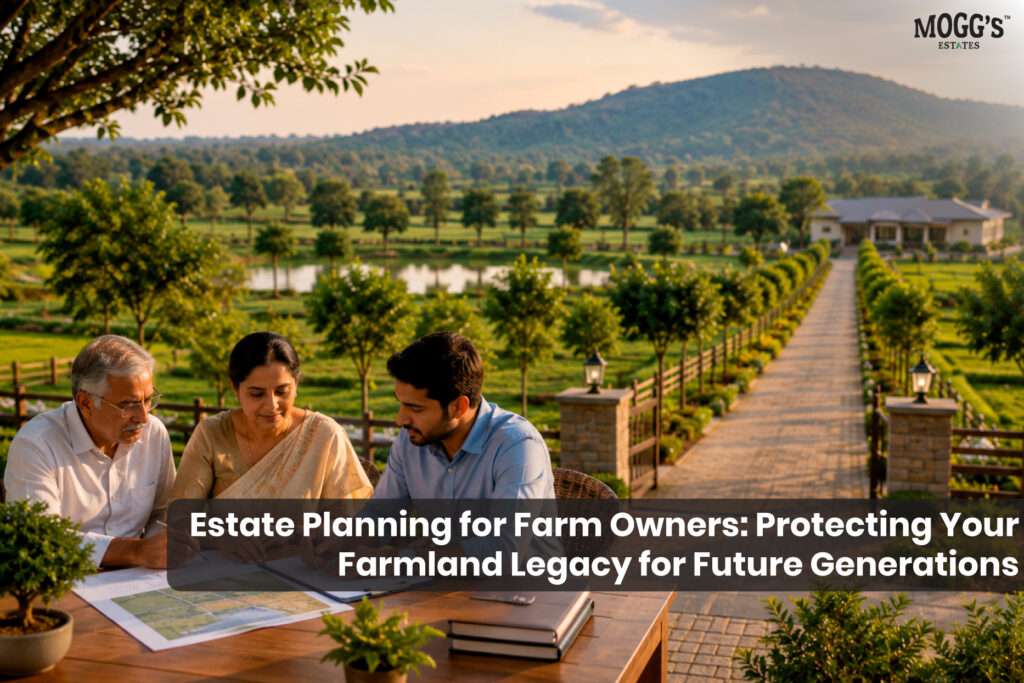
Whether farmland is intended for children, grandchildren, or future family trusts, documenting these intentions today can help avoid unnecessary legal complications tomorrow.
Estate planning is ultimately about continuity.
It ensures that your vision continues long after the original investment has been made.
Legal Preparedness Is Part of Responsible Ownership
Responsible farmland ownership extends beyond purchasing the property.
It includes:
- Maintaining title clarity.
- Updating legal records.
- Understanding local land regulations.
- Reviewing inheritance documentation.
- Staying informed about state land laws.
If you’re investing in Karnataka, we also recommend reading How the Karnataka Land Reforms Amendment Changed Farmland Ownership, which explains important regulatory changes affecting agricultural land ownership.
Why More Investors Are Choosing Managed Farmland
Today’s investors value convenience as much as returns.
Professionals, business owners, and NRIs often lack the time to manage agricultural operations themselves.
Managed farmland addresses this challenge by combining professionally maintained agricultural communities with transparent ownership and long-term planning.
This allows investors to focus on their broader financial goals while their farmland is managed responsibly.
Why Mogg’s Estates Believes in Building Legacies
At Mogg’s Estates, we believe farmland is more than an investment.
It is an asset that has the potential to create lasting value for families across generations.
Our managed farmland communities are developed with a long-term perspective, combining responsible land stewardship, transparent ownership, and professional management.
By making farmland ownership simple and accessible, we aim to help investors build not only wealth but also a meaningful legacy for the future.
The Bottom Line
Estate planning is often seen as something to consider later in life.
In reality, it should be part of every long-term investment strategy from the very beginning.
Whether you own one parcel of farmland or are building a diversified agricultural portfolio, taking time to organise ownership, document your wishes, and prepare for future generations can make a significant difference.
Farmland is a unique asset because it grows in value, supports sustainability, and has the potential to become a family’s enduring legacy.
With thoughtful planning and responsible ownership, that legacy can continue for decades to come.
At Mogg’s Estates, we believe that every investment should be built with the future in mind—because the greatest assets are not only the ones we own, but the ones we leave behind.