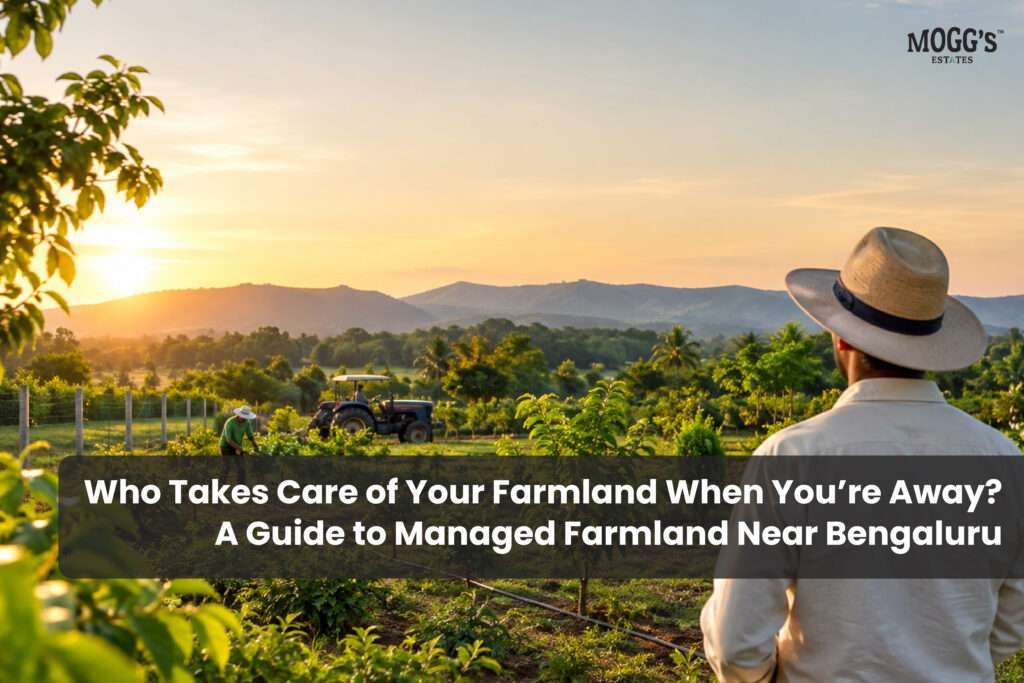
Owning farmland sounds simple. You buy the land, visit when you can, enjoy the greenery, and watch the trees grow. But there is one practical question that many landowners eventually face:
Who takes care of the farm when you are not there?
Farmland needs regular attention. Plants need water. Trees need pruning. Soil needs care. Fencing and pathways need to be checked. Pests and plant diseases need to be monitored. Even a beautiful farm can lose its health and character if it is left unattended for long periods.
This is where Managed Farmland Near Bengaluru offers a different approach to farmland ownership. Instead of leaving the day-to-day responsibilities entirely to the owner, a structured management system can help keep the land, plantations, and farm environment cared for throughout the year.
Farmland Needs Care Beyond the Weekend
For many people living in Bengaluru, farmland is a place to escape the city’s pace. They may want to spend weekends surrounded by trees, enjoy fresh air, walk through plantations, or simply have a place closer to nature.
But farmland does not follow a weekend schedule.
Agricultural activities continue whether the owner is visiting or not.
Water requirements change with the season. Plants grow continuously. Weeds appear. Trees may need pruning. Fences and farm infrastructure need periodic checks.
This is why Farm Management is an important part of long-term farmland ownership.
A well-planned approach makes sure that regular activities do not depend only on how often the owner can visit.
What Does Managed Farmland Actually Mean?
Managed Farmland combines land ownership with an organised approach to maintaining and caring for the agricultural property.
The exact services can differ from one property to another. However, management may involve activities such as:
- Plantation care
- Irrigation and watering
- Soil monitoring
- Weed management
- Pest monitoring
- Pruning and plant care
- Fencing maintenance
- Pathway maintenance
- Farm infrastructure checks
- Seasonal agricultural activities
The idea is straightforward: the land continues to receive regular attention even when the owner is away.
This can be particularly useful for people who want to own agricultural land but cannot visit the property every day.
Who Looks After the Trees?
Trees are one of the most visible parts of a farm, but their care begins long before they become mature.
Young plants may require regular watering and monitoring. As they grow, they may need pruning, nutrient management, pest monitoring, and other forms of care.
Different plants can also have different requirements.
A structured Agricultural Land Management approach takes these requirements into account instead of treating every plant in the same way.
Regular observation is important because small problems can become bigger if they are ignored. Early signs of plant stress, pest activity, or disease can be identified through routine farm visits.
Watering Is Not a Set-and-Forget Activity
Water is essential for agricultural land, but the requirements of a farm can change throughout the year.
Rainfall, temperature, soil conditions, plant maturity, and crop type can all influence water requirements.
Good Managed Farming therefore involves more than simply turning an irrigation system on and off.
The farm needs to be observed and maintained according to its agricultural requirements.
Regular checks can also help identify problems such as damaged irrigation lines, blocked systems, or areas that are receiving too much or too little water.
What Happens When Weeds and Pests Appear?
A farm is a living ecosystem. Along with crops and trees, other plants and organisms are naturally present.
Weeds can compete with plants for nutrients, water, sunlight, and space. Pests and diseases can also affect plant health.
This makes monitoring an important part of Farmland Management.
The right approach depends on the type of plantation and the conditions on the farm. Regular observation allows the management team to identify issues and take suitable action based on the agricultural plan.
The objective is not simply to make the land look neat. It is to support the overall health of the farm.
Farm Maintenance Is Also About the Property
Farm management does not stop with plants.
The physical property also needs regular attention.
Fencing may need inspection. Gates may require maintenance. Internal pathways can need clearing. Water infrastructure needs to function properly. Farm facilities may also require periodic checks.
These activities form an important part of Farm Management Services.
For an owner who visits only occasionally, having these routine responsibilities managed can make the experience of owning farmland much easier.
Instead of arriving after a long gap and discovering several maintenance issues, the property can be monitored regularly.
Bengaluru’s Farmland and the Need for Regular Management
The areas around Bengaluru offer several agricultural landscapes where people are increasingly interested in owning farmland and spending time closer to nature.
Kanakapura is known for its green surroundings and rural landscape. Its proximity to Bengaluru makes it attractive for people looking for a nature-oriented getaway without travelling extremely far from the city.
Hoskote has also developed into an important growth corridor around Bengaluru, with agricultural areas existing alongside expanding infrastructure and connectivity.
Maddur, located between Bengaluru and Mysuru, has a strong agricultural character and offers a different rural setting away from the city’s busy environment.
Kunigal, with its open landscapes and agricultural surroundings, is another location where farmland can provide an opportunity to experience a quieter environment.
Each location has its own soil, climate, vegetation, and agricultural characteristics. That means Agricultural Management Services should be planned according to the requirements of the land rather than following exactly the same routine everywhere.
Why Professional Management Can Make Ownership Easier
Owning farmland does not necessarily mean becoming a full-time farmer.
This is an important distinction.
Someone may appreciate nature, want to own agricultural land, or enjoy spending time at a farm without having the time or experience to handle every agricultural activity personally.
This is where Professionally Managed Farmland can make a difference.
With Professional Farm Management, routine agricultural activities can be organised and carried out by people who are responsible for the regular care of the property.
The owner can remain connected with the land while the day-to-day work is handled through an established management structure.
What Should You Look for in Farm Management?
Not every management arrangement is the same. Before choosing a property, it is useful to understand exactly what is included.
Ask:
What agricultural activities are covered?
Understand whether plantation care, irrigation, pruning, soil care, and monitoring are included.
How often is the property monitored?
Regular visits are important for identifying problems early.
Who manages the plantations?
Understand whether there is a dedicated team or professional support for agricultural activities.
How is the infrastructure maintained?
Ask about fencing, pathways, irrigation systems, and other facilities.
How are seasonal requirements handled?
Farm requirements can change throughout the year, so the management approach should account for seasonal conditions.
Understanding these details helps you evaluate Farmland Management Services more clearly.
Managed Farmland Is About More Than Convenience
The biggest benefit of Fully Managed Farm ownership is not simply avoiding maintenance work.
It is about creating a more consistent relationship between the owner and the land.
A farm that receives regular care has a better opportunity to remain healthy, organised, and enjoyable over time.
Trees continue to receive attention. Agricultural areas are monitored. Infrastructure is checked. Seasonal requirements can be addressed.
For owners who cannot be physically present every day, this creates a practical connection between ownership and ongoing care.
From Ownership to Long-Term Care
Buying agricultural land is the beginning of ownership, not the end of it.
The land changes with every season. Trees grow. Weather patterns change. Agricultural requirements evolve. Infrastructure needs attention.
That is why End-to-End Farm Management can be valuable for people who want a more organised approach to farmland ownership.
It brings different aspects of agricultural care together rather than treating each maintenance activity as a separate responsibility.
For those exploring Managed Agricultural Property around Bengaluru, understanding the management structure can be just as important as looking at the location, land, and surroundings.
A Farm That Is Cared For, Even When You’re Away
The real question is not simply, “Who owns the farmland?”
It is also:
“Who is caring for it?”
A farm needs attention throughout the year. Regular plantation care, irrigation, soil monitoring, pest management, infrastructure checks, and seasonal maintenance all contribute to keeping the property healthy.
For busy owners in Bengaluru, this can make a significant difference.
Whether the farmland is around Kanakapura, Hoskote, Maddur, Kunigal, or another location near the city, consistent care can help preserve the agricultural character and natural environment of the property.
Because owning farmland is not only about having a piece of land.
It is about knowing that the land you own continues to be cared for, even when you are away.