
Quick answer: Mango farming in Karnataka works best on well-drained land with a reliable water source, suitable soil, and a planned orchard layout. Growers choose varieties suited to the district, plant grafted saplings at the right spacing, and manage the orchard through irrigation, nutrition, flowering care, pruning, and pest monitoring. Harvest timing and post-harvest handling decide much of the final quality and price. Mango trees take several years to bear a commercial crop, and yields vary widely with variety, age, care, and weather. Confirm the recommended varieties and practices for your district with the Horticulture Department, a Krishi Vigyan Kendra, or an experienced local grower.
Mango is one of Karnataka’s most important fruit crops, and it is grown across several districts. For many farmers, the orchard is a long-term commitment, so the early decisions on site, variety, and layout matter as much as the care that follows. This guide covers the practical steps: where to plant, which varieties to consider, how to plant and manage the orchard, how to watch for pests, and how to plan the harvest. It also explains where a managed farmland buyer should ask questions about mango trees on the plot.
Why Mango Suits Many Karnataka Farms
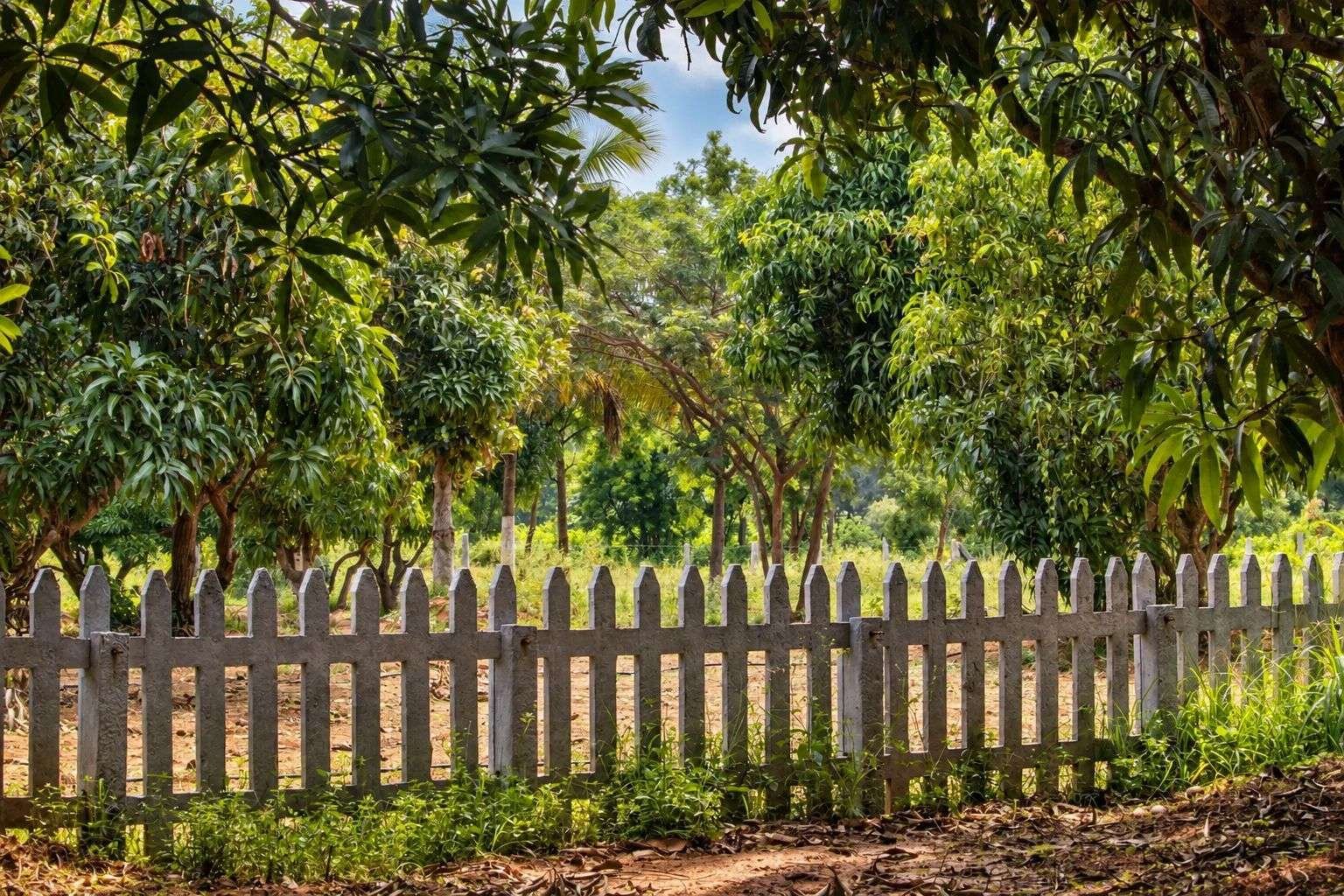
Mango is a long-lived perennial. A well-managed orchard can produce for decades, which makes it a long-term crop rather than a seasonal one. Its fruit has strong domestic demand, and different varieties ripen at different times, which can spread the harvest season.
These strengths come with a long wait. A grafted mango tree usually needs several years before it bears a commercial crop, and full production takes longer. Yields also vary from year to year, because mango is sensitive to flowering weather, pollination, and pest pressure. A grower should plan for the lean years as well as the good ones.
Choosing the Site
Site selection shapes the orchard for its whole life. Check the following before planting:
- Drainage. Mango roots do not tolerate waterlogging. Choose land that drains after heavy rain, and avoid low pockets where water stands.
- Soil depth and texture. Deep, well-drained soil suits mango better than shallow or compacted ground. Test the soil for pH, nutrients, and organic matter.
- Water supply. Young trees need regular irrigation, and mature trees need reliable water through the dry season and the flowering period. Check the borewell or source for yield and reliability.
- Access. Transport, spraying, and harvest all depend on a workable road. Test the access route in the monsoon.
- Wind and shelter. Strong winds can damage flowers and fruit. Consider windbreaks where exposure is high.
Our guide to soil testing reports explains how to read soil results, and farm water management on managed farmland covers water systems in more detail.
Choosing Varieties for Mango Farming Karnataka
Variety choice should follow the district, the climate, the market, and the harvest window you want. Varieties differ in fruit size, flavour, colour, shelf life, and their suitability for the local conditions. Several varieties are grown across Karnataka, and some are associated with particular districts. Before you choose, ask the Horticulture Department, a Krishi Vigyan Kendra, or a local grower which varieties perform well in your area, and why.
When you compare varieties, look at:
- Local performance. Ask for records from comparable orchards nearby, not only from a nursery catalogue.
- Market fit. Some varieties sell better fresh, while others suit processing or the pulp trade. Confirm the buyers before planting.
- Harvest window. Early, mid, and late varieties spread the picking and the labour.
- Pest and disease tolerance. Ask which varieties are more tolerant of the common pests and diseases in your area.
- Source of planting material. Use grafted saplings from a verified nursery with proper records of the rootstock and the variety.
Avoid planting a large block of a single variety without a market plan, because a glut at harvest can depress prices.
Planting the Orchard
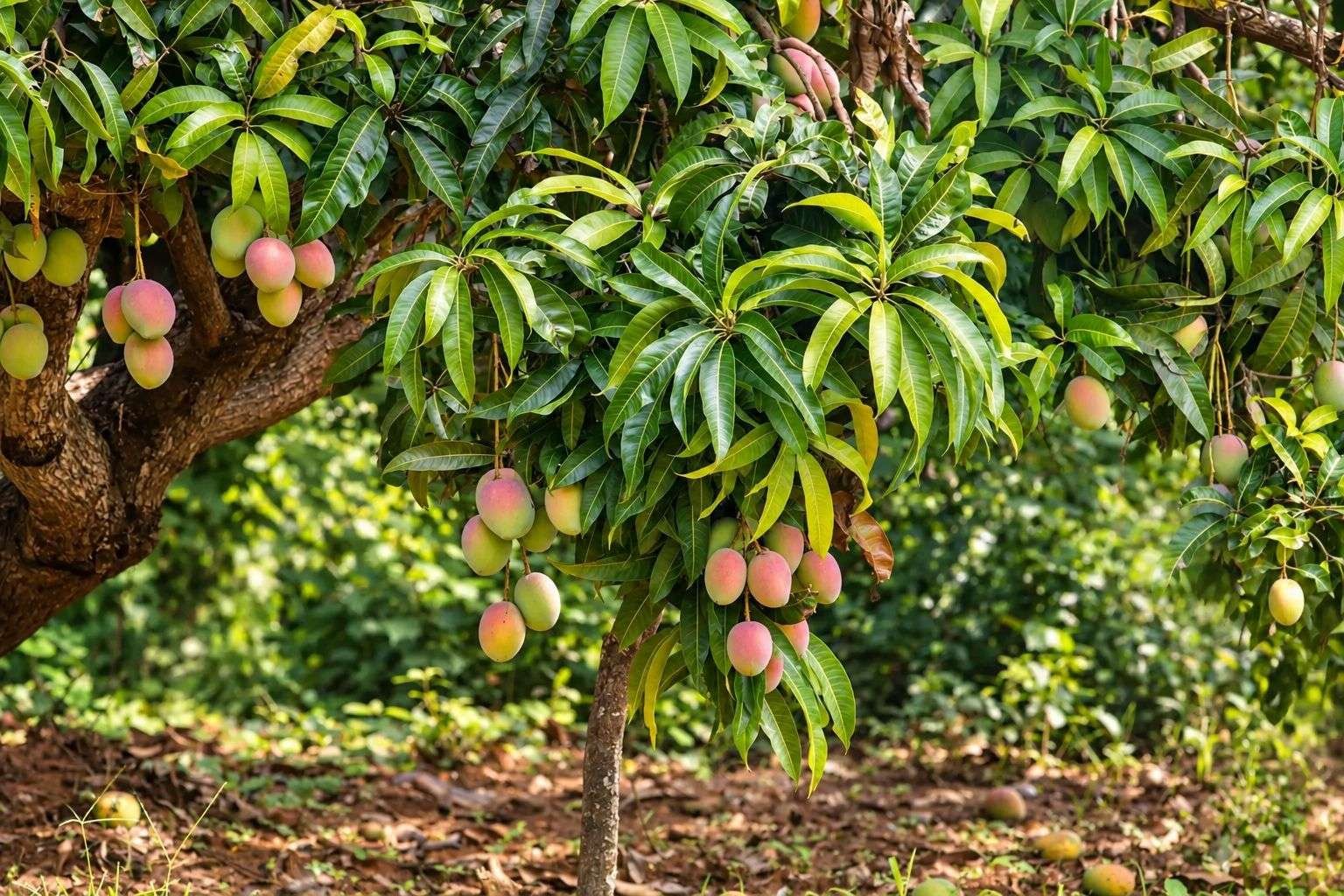
Good planting sets up the orchard for years, and mango farming Karnataka growers should confirm spacing and pit size locally
Layout and spacing. Mark the orchard in a regular grid. Spacing depends on the variety, the rootstock, and the training system. Wider spacing gives more light and easier access, while closer spacing gives more trees per acre but needs more management. Ask your adviser to recommend the spacing for the variety you choose.
Pits. Dig pits of the size recommended for your soil, and fill them with topsoil mixed with organic matter. Allow the pits to settle before planting, and avoid planting into waterlogged or compacted ground.
Planting material. Use healthy grafted saplings. Plant them at the same depth they were in the nursery, with the graft union above soil level. Protect young trees from grazing animals and strong sun until they establish.
Irrigation from the start. Drip irrigation is widely used for young mango trees, because it delivers water near the roots and reduces waste. Install the system before planting, and test it for uniform flow.
Records. Keep a planting map that shows each row, the variety, the date of planting, and the source of each sapling. These records help with later decisions on pruning, spraying, and harvest.
Orchard Care: The Main Tasks
Orchard care is a year-round routine. The key tasks are these:
Irrigation. Water young trees regularly, and adjust the amount for the season and the tree’s age. Mature trees need less water in the rainy season, but they need steady moisture during fruit development. Avoid both drought stress and waterlogging. Irrigation should follow soil moisture, not a fixed calendar alone.
Nutrition. Apply fertiliser and organic matter based on soil test results and the tree’s stage. Over-application can harm growth and fruit quality, and nutrient shortages can reduce yield. Ask an adviser for a nutrient plan for each stage of the orchard.
Pruning and training. Pruning shapes the canopy, removes dead or diseased wood, and opens the tree to light and air. Good pruning helps flowering and reduces pest and disease problems. Prune at the right time for the variety and the climate.
Weed control. Keep the area under the trees clean enough to reduce competition for water and nutrients. Use methods that suit the orchard and the soil, and avoid damaging shallow roots.
Flowering and fruit set. Flowering is critical, and many factors affect it, including temperature, humidity, rain during flowering, and pollination. Ask your adviser about the flowering practices recommended for your variety and district.
Thinning and fruit care. Remove excess or damaged fruit where recommended, so that the remaining fruit develops well. Protect fruit from sun scald and from pests during development.
Pest and Disease Monitoring
Pests and diseases can reduce yield in any mango farming Karnataka orchard, so regular monitoring is essential. Common concerns in mango orchards include the following. Confirm the local pest list and the treatment rules with your Horticulture Department or KVK, because the threats and the approved methods vary by area.
- Mango hopper affects flowers and young shoots, which can reduce fruit set.
- Fruit fly damages developing fruit and can affect marketability.
- Powdery mildew affects flowers and young fruit in humid weather.
- Anthracnose causes fruit spots and rot, especially in wet conditions.
- Stem borer and other trunk pests weaken trees over time.
A practical monitoring approach has several parts. Inspect the trees regularly, especially during flowering and fruit development. Use traps where recommended to track pest numbers. Record each inspection and any treatment. Prefer integrated pest management, which combines cultural practices, natural enemies, and approved inputs used only when needed. Follow label instructions, withholding periods, and any residue rules for the market you sell to.
Our guide to farm water management and the soil testing report can help with the conditions that make pests and diseases more likely, such as waterlogging and poor nutrition.
Harvest Planning for Mango Farming Karnataka
Harvest timing affects both the quality and the price. Pick fruit at the right maturity stage for the variety and the destination. Fruit picked too early may not ripen well, and fruit picked too late may spoil in transit or on the shelf. Plan the harvest in advance, arrange labour and transport, and confirm the buyers and the delivery schedule.
After harvest, handle the fruit gently. Grade, clean, and pack it carefully, and keep it cool where the market requires it. Damage during picking and transport is a common cause of loss. Ask buyers for their quality standards in writing before the harvest begins.
Post-Harvest Handling and Markets
Post-harvest work decides how much of the crop reaches the buyer in good condition. Key steps include sorting for size and defects, washing where required, grading, packing in suitable containers, and storing or transporting at the right temperature. Markets differ in their requirements, so match the packing and grading to the buyer.
Before planting, identify the markets. These may include local markets, wholesale buyers, processors, or direct sales. Confirm the price basis, payment terms, and any contract in writing. Market prices change from season to season, so do not plan on a fixed price unless a binding agreement says so.
Support Schemes and Price Protection
Some support is available to mango farmers in Karnataka, and the terms change from year to year. In June 2026, reports said the state would run a price deficiency payment scheme for mango farmers for the 2025–26 season, with the Karnataka State Mango Development and Marketing Corporation as the nodal implementing agency. Check the scheme order for eligibility, the price reference, and the payment process.
Horticulture subsidies may also apply to planting, irrigation, or infrastructure. Eligibility depends on the scheme and the applicant. Our guide to horticulture subsidy in Karnataka explains the schemes and the documents to prepare.
Mango Trees on Managed Farmland
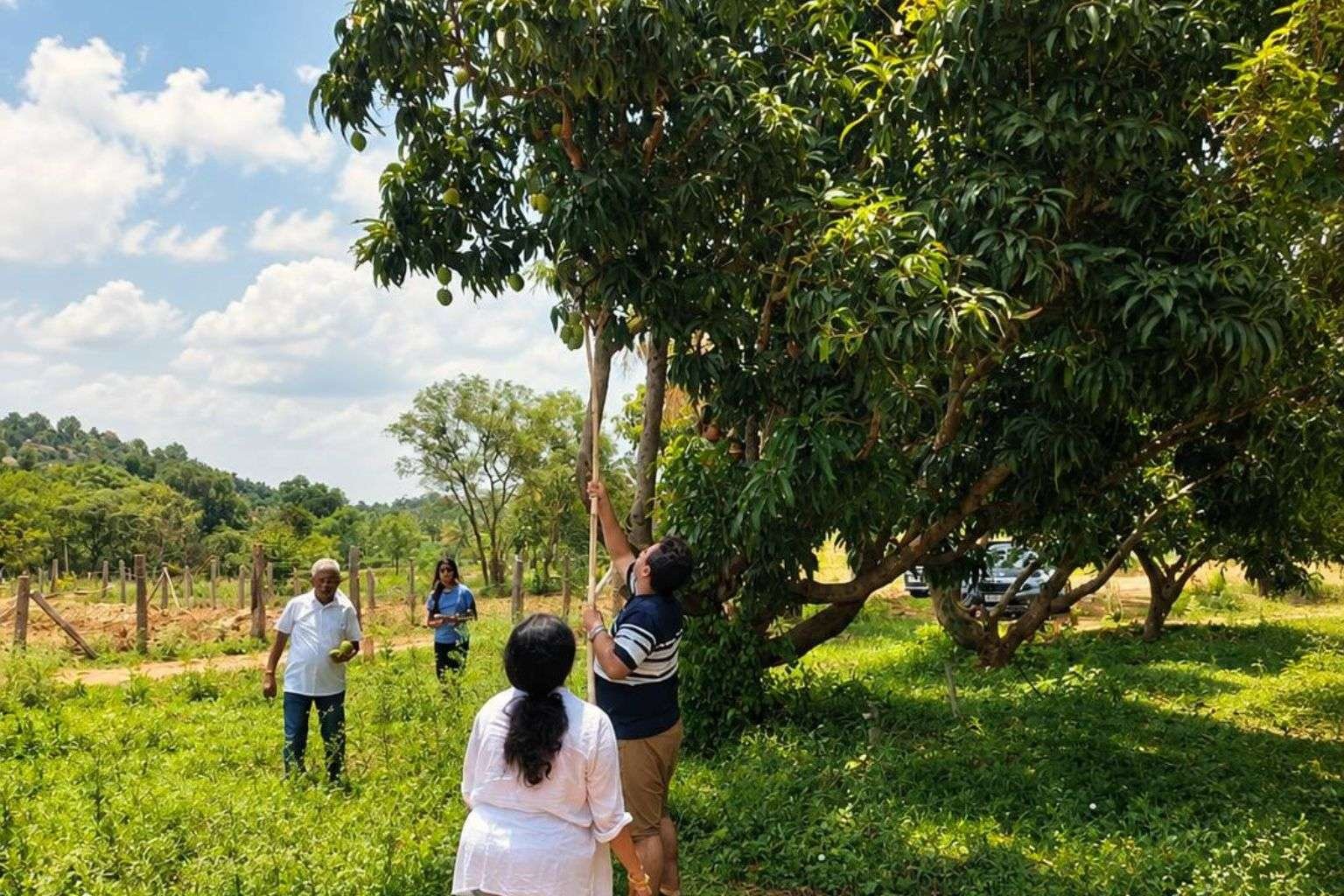
Some managed farmland projects list mango trees among their plantations. The Aira Farms lists mango alongside other fruit and forest trees, and it states that four full-time workers are assigned to support plot care. Confirm for each plot which mango varieties are planted, how many trees there are, their age, and the care plan.
A buyer of managed mango trees should ask:
- Which varieties are planted on my plot, and which rootstock?
- How old are the trees, and when are they expected to bear?
- Who decides on irrigation, nutrition, pruning, and pest control?
- What pest monitoring records will I receive, and how often?
- Who arranges the harvest, the grading, and the sale?
- Who receives the proceeds, and what costs are deducted?
- What happens if the trees fail, or if the yield is poor?
Any income from mango is uncertain, and no team can guarantee a harvest or a price. For the wider model, see our guide to managed farmland near Bengaluru.
Common Mistakes in Mango Farming
- Planting without a market plan or a buyer
- Choosing a variety without checking local performance
- Ignoring drainage and planting into waterlogged ground
- Using unverified saplings or unrecorded rootstock
- Over-fertilising, or neglecting the soil test
- Skipping pest monitoring during flowering and fruit development
- Harvesting at the wrong stage, or handling fruit roughly
- Expecting full yields in the early years
Checklist Before You Plant
Use this checklist before you start mango farming Karnataka on a new plot.
- Confirm the site drains well, and test the soil.
- Check the water source for yield in the dry season.
- Choose varieties suited to the district, and confirm local performance.
- Confirm the markets, the buyers, and the price basis in writing.
- Buy grafted saplings from a verified nursery, with records.
- Plan the spacing, the pits, and the drip irrigation before planting.
- Set up a monitoring and record-keeping routine from the start.
- Plan the harvest, the labour, and the transport in advance.
- Check any support scheme for the season, and confirm eligibility.
Key Takeaways
- Mango farming in Karnataka suits well-drained land with reliable water, suitable soil, and a planned orchard layout.
- Variety choice should follow the district, the market, and the harvest window, and should be confirmed with local experts.
- Early planting decisions, including site, spacing, and planting material, shape the orchard for decades.
- Orchard care covers irrigation, nutrition, pruning, weed control, flowering care, and fruit care.
- Pest monitoring and integrated management reduce losses and protect marketability.
- Harvest timing, post-harvest handling, and a confirmed market decide much of the final return.
- Mango trees take years to bear, and yields and prices vary, so no return can be guaranteed.
FAQs:
Which mango varieties grow best in Karnataka?
It depends on the district, the climate, and the market. Ask the Horticulture Department, a Krishi Vigyan Kendra, or an experienced local grower which varieties perform well in your area.
How long does a mango tree take to bear fruit?
A grafted mango tree usually needs several years before it bears a commercial crop, and full production takes longer. The exact timing depends on the variety, the rootstock, and the care.
What is the best spacing for a mango orchard?
The right spacing depends on the variety, the rootstock, and the training system. Ask a local adviser for the recommended spacing for your variety and soil.
Does mango need a lot of water?
Young trees need regular irrigation, and mature trees need steady moisture during fruit development. Drip irrigation is widely used because it delivers water near the roots.
How do I control pests in a mango orchard?
Use integrated pest management, which combines regular monitoring, cultural practices, natural enemies, and approved inputs used only when needed. Follow the label instructions and the local advice on the pests in your area.
Can I get a subsidy for mango farming in Karnataka?
Possibly. Schemes change from year to year, and eligibility depends on the scheme and the applicant. Check the current guideline with the Horticulture Department before you plan around any support.