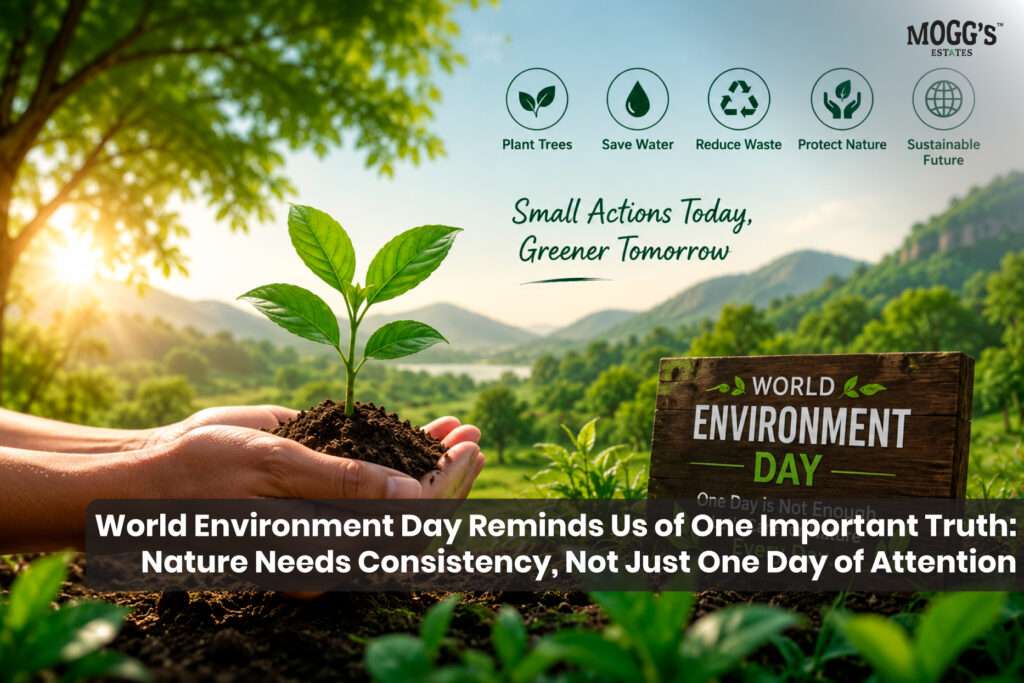
Every year on June 5th, World Environment Day reminds us of the importance of protecting our planet. Across the world, people participate in awareness campaigns, tree plantation drives, sustainability initiatives, and environmental discussions. While these efforts create positive conversations, the real impact comes from what we do during the remaining 364 days of the year.
Nature does not need occasional attention. It needs consistent care.
The air we breathe, the food we eat, and the water we depend on all originate from healthy ecosystems. Forests regulate climate, agricultural land supports food production, and biodiversity helps maintain ecological balance. This is why environmental conservation cannot be treated as a one-day activity. It must become part of our everyday decisions and long-term thinking.
Global initiatives around World Environment Day continue to focus on sustainability, land restoration, biodiversity conservation, and climate resilience. These themes share a common message: the future of our environment depends on consistent action rather than temporary awareness.
In rapidly growing cities like Bengaluru, this message feels more relevant than ever. Urban expansion has transformed the landscape over the last decade. Green spaces are becoming increasingly valuable, and many people are searching for meaningful ways to reconnect with nature while contributing to a greener future.
This changing mindset is one reason why interest in farm investment has grown significantly in recent years. Investors today are not simply looking for financial returns. They are seeking opportunities that combine long-term value with environmental responsibility.
Owning farmland allows individuals to preserve green spaces, support agricultural activities, and maintain a stronger connection with nature. Unlike conventional urban investments, farmland offers a tangible relationship with the environment while also creating opportunities for sustainable land use.
The growing popularity of farms Bangalore projects reflects this shift. More people are choosing experiences that allow them to spend time outdoors, reconnect with natural surroundings, and escape the pressures of city life. For many families, farmland ownership represents a healthier lifestyle and a more meaningful investment.
Another trend that continues to gain momentum is weekend farming. Busy professionals often spend most of their week surrounded by traffic, screens, and urban routines. Spending weekends on a farm offers a refreshing alternative. It provides an opportunity to experience open spaces, participate in agricultural activities, and enjoy quality time with family and friends.
Weekend farming is also helping people develop a deeper appreciation for the effort involved in food production. Activities such as planting trees, caring for crops, and maintaining green landscapes create a stronger connection with the environment and encourage more sustainable habits.
Similarly, searches for a mango farm near me have increased as people explore opportunities to own productive agricultural land. Mango orchards are not only visually appealing but also contribute to environmental sustainability by creating green cover and supporting biodiversity.
A well-maintained mango farm represents more than an agricultural investment. It becomes a living ecosystem that continues to grow and evolve over time. Families can enjoy the experience of visiting their orchards, watching trees mature, and participating in a legacy that can be passed on to future generations.
Modern managed farmland projects are also helping bridge the gap between investment and sustainability. Through professional farm management, landowners can participate in agriculture without needing to manage daily farming operations themselves. This ensures that agricultural activities continue efficiently while maintaining environmental standards.
Managed farmland encourages responsible land stewardship by supporting tree plantations, water conservation practices, soil health management, and sustainable agricultural methods. These practices contribute positively to local ecosystems while creating long-term value for landowners.
World Environment Day serves as an important reminder that environmental protection is not solely the responsibility of governments, organizations, or activists. Every individual has a role to play. Small actions, when performed consistently, can create a significant collective impact.
Planting trees, reducing waste, conserving water, supporting sustainable agriculture, and preserving green spaces are all examples of actions that contribute to environmental well-being. The goal is not perfection. The goal is consistency.
The environment benefits when people make conscious choices throughout the year rather than focusing only on a single day of awareness. Real change happens when sustainability becomes part of everyday life.
As awareness around environmental issues continues to grow, more people are recognizing that investments can serve a greater purpose. Whether through preserving agricultural land, supporting sustainable farming practices, or maintaining green landscapes, individuals can contribute positively to the future of the planet while creating long-term value for themselves and future generations.
The truth is simple: nature does not ask for grand gestures once a year. It rewards consistent care every day.
This World Environment Day, instead of asking what we can do for nature today, perhaps we should ask ourselves a better question: what can we continue doing for nature throughout the year?
Because when we nurture nature consistently, it gives back in ways that no other investment ever can.