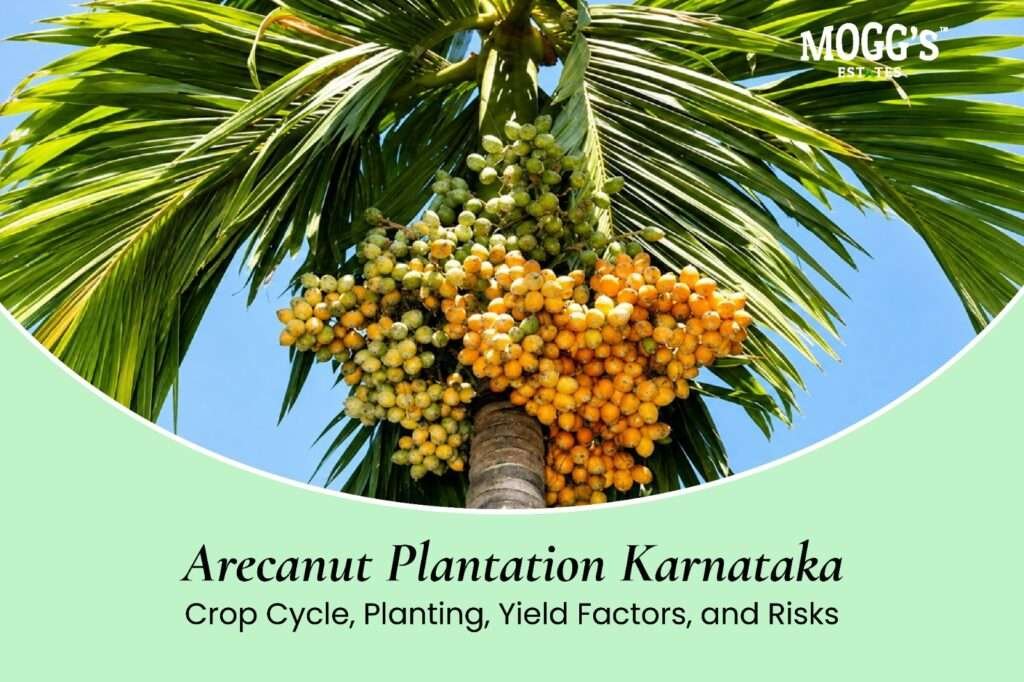
Arecanut plantation in Karnataka is a long-term palm crop grown mainly in the Malnad region, including Shivamogga, and in other humid districts. Palms are raised from seedlings, planted at wide spacing, and take several years to bear. Yield depends on variety, irrigation, nutrition, soil, rainfall, and the control of pests and diseases, especially fungal disease in wet weather. Growers and buyers should treat any yield or income figure as an estimate, confirm the local variety and practice with the Horticulture Department or a Krishi Vigyan Kendra, and verify the land and the plantation records before paying.
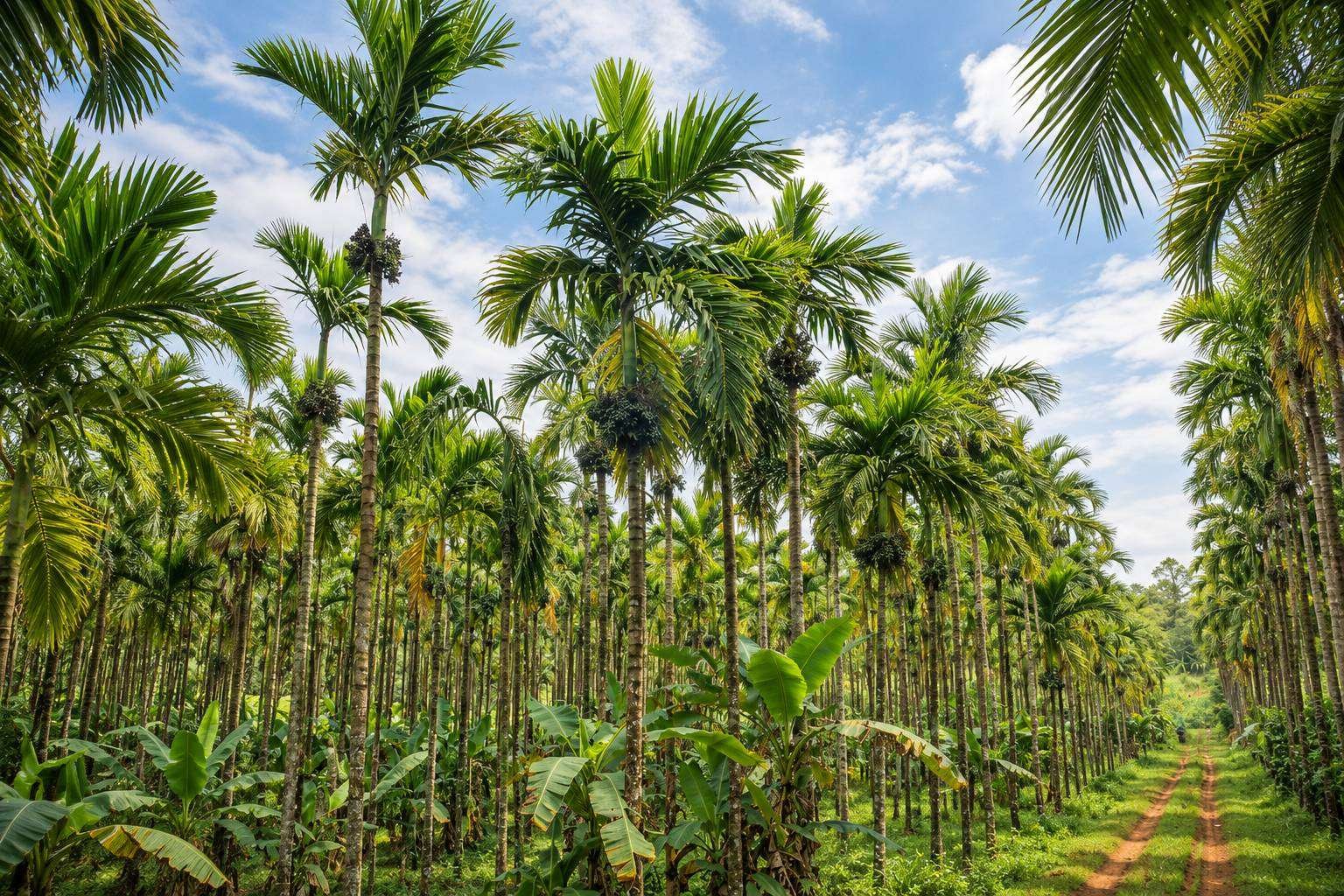
Arecanut, also called areca nut or betel nut, is one of the established plantation crops of Karnataka. It is a slow crop. A planter waits several years for a first harvest, and the economics depend on care, weather, and market prices over decades. This guide explains the crop cycle, how plantations are set up, what drives yield, the main risks, and what a buyer should check before investing in arecanut land.
What Is Arecanut and Where Is It Grown?
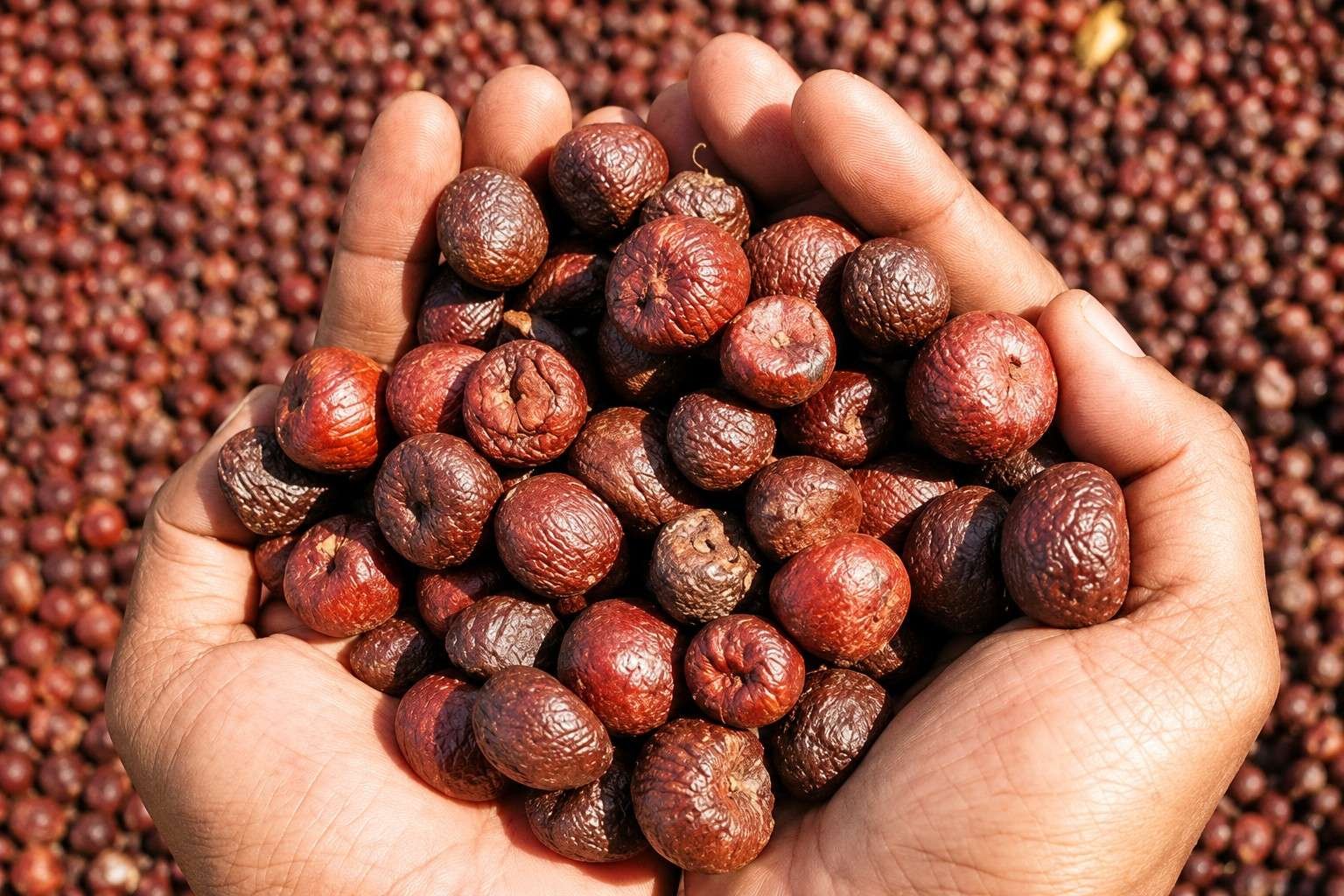
Arecanut is the seed of the areca palm, a tall, slender palm that grows in humid tropical conditions. The seed is harvested, dried, and processed for use as a masticatory and in religious and social customs. Commercial production is a plantation activity, and its scale and economics depend on the region, the variety, and the market.
In Karnataka, arecanut is grown mainly in the Malnad region, including Shivamogga, and in other humid, high-rainfall districts. The crop suits well-drained soils with reliable moisture. Confirm the suitability of a specific site with local experts before planting, because microclimate, soil, and water vary within short distances.
What Conditions Does Arecanut Need?
Arecanut performs best where rainfall is high and well distributed, humidity is consistently high, and the soil drains well while holding moisture. Waterlogging damages roots, and prolonged dryness reduces nut set and growth.
The key conditions to assess on any plot are these:
- Rainfall and humidity. Adequate, reliable rainfall supports growth. Local records and advisers should confirm what the site receives.
- Soil. Well-drained, fertile, deep soil suits the palm. Test the soil for pH, organic matter, and nutrients before planting.
- Water supply. Irrigation is needed in dry periods and during the early years. Check the source, its yield, and its reliability through the dry season.
- Shade and wind. Young palms need protection from strong sun in the early stages, and exposed sites may need windbreaks.
- Access. Harvest, transport, and processing depend on reliable road access.
Our guide to the soil testing report explains how to read soil results, and farm water management covers water systems for plantations.
How Is an Arecanut Plantation Established?
Choose the variety and planting material. Buy seedlings from a verified source, and ask for the variety name and the record of how the seed was selected. Ask whether the seedlings have been tested for disease.
Plan the spacing. Arecanut is planted at wide spacing, and the exact spacing depends on the variety, the soil, and any intercrop. Ask a local adviser for the recommended spacing for your conditions.
Prepare the pits. Dig pits of the size recommended for your soil, and fill them with topsoil and organic matter. Allow the pits to settle before planting.
Plant at the right season. The planting season depends on the local rainfall pattern, so confirm the timing with local experts. Plant when moisture is adequate, and protect young seedlings.
Set up irrigation early. Install an irrigation system before the dry season, and test it for even flow. Water young palms regularly until they are established.
Keep records. Record the planting date, the variety, the source of the seedlings, and the spacing for each block. These records help with later decisions and with any dispute about the plantation.
The Crop Cycle: From Planting to Harvest
Arecanut is a slow crop, and the cycle runs over many years. The stages below are general, and the timing depends on the variety, the climate, and the care.
Establishment (the early years): The palm develops its root system and trunk. Growth is slow, and the palm needs regular watering, weeding, shade in the early stage, and nutrition. Losses at this stage are common if care is weak.
Juvenile phase: The palm grows taller and begins to develop its crown. Flowering starts later. Nutrition and water remain important, and any disease should be treated promptly.
Bearing phase.: The palm flowers and sets nuts. The crop is harvested over several months in the usual cycle. Yield rises as the palm matures, and it depends on the care given in earlier years.
Mature phase: The palm continues to bear for many years, with yield varying with weather, disease, and management. Replacement of older palms may be considered in the long term, depending on the plantation plan.
Ask for a written plan that shows the expected stages for your plantation, the care at each stage, and the points at which costs and returns are expected to change. Treat any single year’s figure as an estimate.
Yield: What Drives It
Yield per acre varies widely between plantations. The main factors are these:
- Variety and planting material: Quality of the seedlings and their genetic line affect potential yield.
- Spacing and plant density: The number of palms per acre affects the total crop, but overcrowding reduces yield per palm.
- Water and irrigation: Adequate moisture through the dry season supports nut set and growth.
- Nutrition: Balanced fertilisation, based on soil tests and palm age, sustains bearing.
- Pest and disease control: Losses from fungal and other diseases can reduce yield sharply.
- Weather: Heavy rain, drought, and extreme temperatures in key periods affect flowering and nut development.
- Care and records: Timely operations and good records help a planter manage each stage.
Do not use a yield figure from a brochure without asking how it was measured, over how many years, under what management, and for which variety. Ask for the records of comparable plantations in the same area.
Pests and Diseases to Plan For
Arecanut faces several pests and diseases. The most important concerns in humid conditions are fungal diseases, which can damage the crown, the nuts, and the young palms. Confirm the local disease list and the treatment rules with the Horticulture Department, a Krishi Vigyan Kendra, or the local research institute.
Good practice includes regular inspection, removal of diseased material, sanitation, timely and approved treatment, and attention to drainage and air circulation. Follow label instructions, withholding periods, and any residue rules for the market you supply. Do not rely on a general spray schedule without local advice.
Harvesting, Processing, and Marketing
Arecanut is harvested when the nuts reach the right maturity. The harvest is usually carried out in several rounds across the season, because nuts do not all ripen together. Harvesting requires climbing or access equipment, and labour must be arranged in advance.
After harvest, the nuts are processed, which typically involves boiling, drying, and grading. Processing quality affects price. Ask the buyer or processor about grade standards, moisture levels, and payment terms before the crop is ready.
Market prices vary with the season, the grade, the year, and the volume reaching the market. Do not use a single price figure as a benchmark. Check recent market records and speak to local buyers before estimating income.
Costs and Income: Model the Full Cycle
Arecanut income is spread over many years, and costs arrive earlier. A realistic model should include the land, planting material, irrigation, fertiliser, pest and disease control, labour for planting, weeding, harvest, and processing, transport, and the cost of capital during the years before the first harvest.
Build the model with a conservative case, a central case, and a poor case. Include at least one low-yield year, one disease year, and one price drop at harvest. If the poor case produces a loss you cannot absorb, the plantation needs more reserves or a different plan.
The Main Risks
Long wait for returns: The first harvest may take several years, and the early years produce little income.
Disease: Fungal disease in wet weather can cut yield and damage the crop, and losses can be severe in a bad season.
Water stress: Drought in key periods reduces nut set and growth. Dependence on a single borewell increases the risk.
Price volatility: Market prices change with supply, demand, and the year, and they can fall sharply.
Weather: Unseasonal rain, storms, or extreme heat can damage flowers, nuts, and palms.
Management risk: Poor care, weak records, or a failing management team can reduce yield over time.
Land and title risk: A plantation on land with a doubtful title, a Kharab share, or a conversion problem carries legal risk, however good the trees look. Our guide to Kharab land in Karnataka explains one such check.
Arecanut on Managed Farmland: What to Confirm
Mogg’s Estates lists arecanut among the trees at Arecanut Farm, a managed farmland project of about 20 acres near Shivamogga. The project page lists arecanut alongside coconut, mango, lemon, custard apple, chikoo, and jackfruit, along with tomato as another crop. The project page is at Arecanut Farm.
The page does not state the arecanut variety, the number of palms on each plot, their age, the planting year, the expected yield, or who sells the crop. Kanakapura lies outside the Malnad region, so the suitability of the site for arecanut should be confirmed with local experts. Ask the project team, in writing:
- Which arecanut variety is planted, and how many palms are on my plot?
- How old are the palms, and when are they expected to bear?
- What irrigation and nutrition programme applies, and who decides it?
- What disease monitoring and treatment records will I receive?
- Who harvests, processes, and sells the nuts, and who receives the proceeds?
- What costs are deducted before payment?
- What happens if the palms fail or the yield is poor?
For the wider model, see managed farmland near Bengaluru.
Before You Invest in Arecanut Land
Before committing money to an arecanut plantation, ask yourself and your advisers these questions:
- Does the site have the rainfall, soil, and water the palm needs?
- Can I wait several years for a first harvest, and absorb the early costs?
- Do I have access to a disease adviser and a verified source of planting material?
- Is there a buyer or a processing route for the nuts?
- Does the land have a clear title, a clear recorded use, and no unexplained Kharab share?
- Who will manage the plantation, and under what written terms?
If the answer to any of these is no, pause and take advice.
Key Takeaways
- Arecanut plantation in Karnataka is a long-term palm crop, grown mainly in the Malnad region and other humid districts.
- Establishment and the juvenile phase take several years before a commercial harvest.
- Yield depends on variety, spacing, water, nutrition, disease control, weather, and care.
- Fungal disease and water stress are the main production risks, and price volatility is a major financial risk.
- Model the full cycle with conservative, central, and poor cases, and include the early years of cost.
- Mogg’s Estates lists arecanut at Aira Farms Phase 1, but the variety, the palm numbers, the age, and the management terms must be confirmed in writing for each plot.
FAQs:
How long does an arecanut palm take to bear?
It usually takes several years before a commercial harvest, and the exact period depends on the variety, the climate, and the care given.
Where is arecanut grown in Karnataka?
It is grown mainly in the Malnad region, including Shivamogga, and in other humid, high-rainfall districts. Confirm the suitability of a specific site with local advisers.
What soil suits arecanut?
Well-drained, fertile, deep soil that holds moisture suits the palm. Test the soil before planting and correct it as advised.
What is the main disease risk?
Fungal disease in wet weather is a major concern. Monitor the palms regularly, remove diseased material, and use approved treatments as advised locally.
Can arecanut be grown on any land in Karnataka?
No. Rainfall, soil, water, and microclimate decide suitability. Ask local experts and records from comparable plantations before planting.