
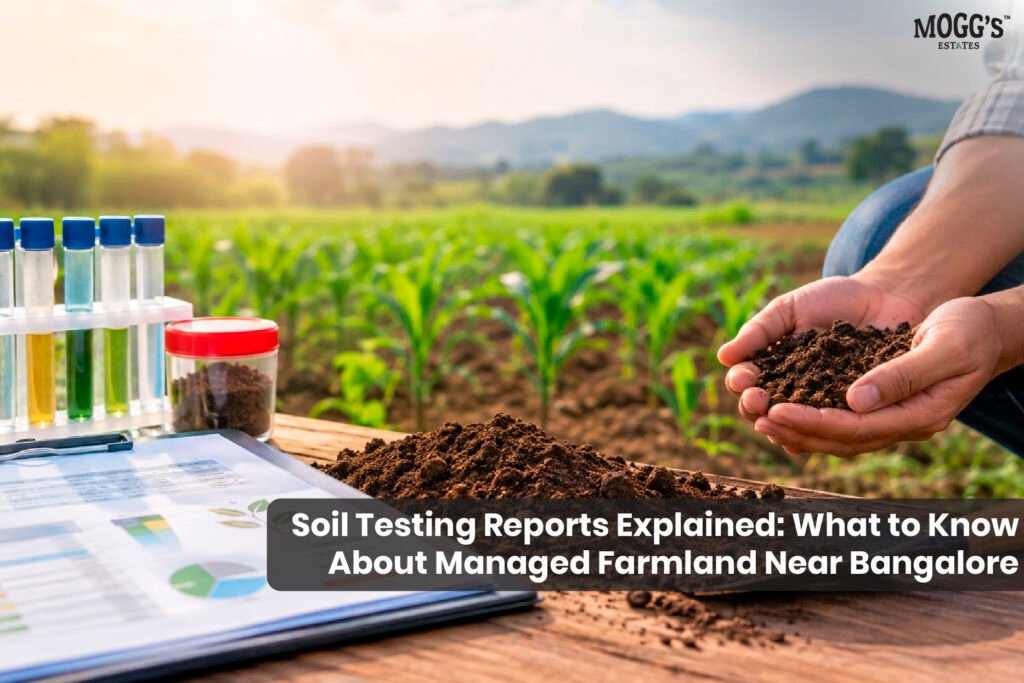
A soil testing report is a laboratory analysis that shows the condition of your soil, including its pH, electrical conductivity, organic carbon, and key nutrients. Farmers and agricultural experts use these results to plan irrigation, choose suitable crops, and manage nutrients. This guide explains how to read a soil testing report, why it matters for managed farmland near Bangalore, and what the results can and cannot tell you.
Soil reveals a lot about how land will perform. Healthy soil supports strong plant growth, helps farmers plan water use, and makes nutrient management more efficient. Soil conditions differ from one property to another, even within the same region. For that reason, testing is a practical first step before any important agricultural decision.
If you are exploring managed farmland, a soil testing report gives you a clearer view of the agricultural side of the property. Read on to learn what each measurement means and how to avoid the most common misunderstandings.
What Is a Soil Testing Report?
A soil testing report is a document that presents the results of a lab test on soil samples. Farmers, agronomists, and land managers rely on it to understand how the soil is performing and what it may need.
Most reports include the following measurements:
- Soil pH
- Electrical conductivity (EC)
- Organic carbon
- Nitrogen, phosphorus, and potassium
- Secondary nutrients, such as calcium, magnesium, and sulfur
- Trace nutrients, such as zinc, iron, boron, manganese, and copper
Each result describes one specific characteristic of the soil. When you read them together, you get a fuller picture. Farm experts use that picture to decide which crops suit the land and which practices will help it stay productive.
For buyers of managed farmland, a soil testing report also explains why different crops need different conditions. A crop that thrives in one soil may struggle in another. The report helps connect the land’s characteristics with what can realistically be grown.
A soil testing report has limits, though. Weather, water availability, crop selection, and daily farm care all shape agricultural results. The report describes the soil at the time of testing. It does not predict a harvest.
How to Read a Soil Testing Report: Key Measurements
Each section of a soil testing report answers a different question. The following sections explain the most important measurements and what they tell you.
1. Soil pH
Soil pH measures how acidic or alkaline a soil is. The scale runs from 0 to 14, and a value of 7 is neutral. Readings work like this:
- Below 7: Acidic soil
- Around 7: Neutral soil
- Above 7: Alkaline soil
Different crops perform best within different pH ranges. pH also controls how easily plants can take up certain nutrients. A soil may hold plenty of a nutrient, yet plants cannot absorb it if the pH is wrong. This is one reason pH appears near the top of most reports.
If the pH falls outside the range that suits your crop, agricultural experts can recommend changes. These may include soil improvers, adjusted cultivation methods, or crops better matched to the existing conditions. Always read the pH alongside the other results, because a single number rarely tells the full story.
2. Electrical Conductivity
Electrical conductivity, usually shortened to EC, measures how well a soil solution carries an electric current. Dissolved salts conduct electricity, so EC is a common way to estimate soluble salt levels.
High salt levels make it harder for plants to take up water, even when the soil is moist. For this reason, EC matters most on land that depends on irrigation. The meaning of a reading depends on the test method, the soil type, and the salt tolerance of the crop. Compare EC results only when they come from the same lab and method.
Regular monitoring helps farm managers spot salt build-up early. When EC runs high, the most useful next step is usually to review irrigation water quality and drainage with a qualified advisor.
3. Organic Carbon
Organic carbon is a key indicator of soil organic matter. Organic matter supports several processes that keep soil healthy:
- Soil structure, which affects how easily roots grow and move through the ground
- Moisture retention, which helps soil hold water between irrigations or rainfall
- Biological activity, which supports the organisms that break down nutrients
- Nutrient cycling, which releases nutrients to plants over time
Organic carbon is just one part of a full soil assessment. Read a low or high result alongside pH, nutrient levels, and EC. Practices such as compost use, crop residue management, and suitable planting methods can build organic matter over time. Because the right approach depends on the existing soil, the test gives you a starting point, and expert advice guides the next step.
a. Primary Nutrients: NPK
Plants need essential nutrients to grow. Most soil testing reports highlight three primary nutrients: nitrogen, phosphorus, and potassium, often written as NPK.
Nitrogen supports leaf development and overall growth. Plants need it throughout the growing season, but the amount varies by crop and growth stage. Too much nitrogen creates its own problems, including imbalanced growth and nutrient losses. Base application decisions on the soil results and the crop’s needs.
Phosphorus supports root development and key energy processes in plants. Soil pH and the testing method both influence how much phosphorus plants can use. The report helps experts decide whether phosphorus needs attention.
Potassium plays a role in water regulation and several functions linked to plant health. The right level depends on the crop and soil type. Testing shows whether potassium needs to be added and roughly how much.
Nutrient recommendations should always come from a qualified reading of the report. General assumptions about what a field “needs” often lead to wasted fertilizer or new problems.
b. Secondary Nutrients and Trace Nutrients
Many reports also list secondary nutrients and trace nutrients. Secondary nutrients include calcium, magnesium, and sulfur. Trace nutrients include zinc, iron, boron, manganese, and copper.
Plants need trace nutrients in much smaller amounts than primary nutrients, but each one has a clear job. A shortage can reduce yields or appear as visible symptoms in leaves and stems.
A shortage does not always mean you should add more of a nutrient right away. Soil pH, crop needs, and existing nutrient levels all affect whether an addition makes sense and how much to use. Checking these factors first prevents unnecessary fertilizer use and supports responsible farm management.
Soil Testing Report Limitations for Farm Planning
A soil testing report is useful, but it does not answer every question. It describes conditions at the time of sampling. Soil changes with rainfall, irrigation, cultivation, and season, so the results begin to age as soon as the sample is taken.
Different laboratories also use different methods and reference ranges. Two reports for the same field may look different for that reason alone. Compare reports carefully, and ask an agricultural advisor to explain the results in the context of your crop and your location.
Finally, a report cannot measure everything that affects a farm. Drainage, pests, labour, access, and management quality all shape the outcome. Treat the soil testing report as one input among several.
Why Soil Testing Matters for Managed Farmland near Bangalore
Bangalore and the surrounding districts include farmland with different soil types, rainfall patterns, and growing conditions. Land use, irrigation practices, and farming methods all influence soil health over time. Good farm management responds to the specific needs of each property rather than applying one approach everywhere.
Soil testing helps agricultural teams:
- Spot nutrient shortages before they affect plant growth
- Understand whether the soil is acidic, neutral, or alkaline
- Choose crops that suit the land
- Manage nutrients more efficiently and avoid unnecessary inputs
- Track how soil conditions change over time
Professional farm management goes beyond planting. It includes monitoring soil, managing water, and adjusting practices as crops and conditions change. A soil testing report is one of the most practical tools in that process.
For people researching managed farmland near Bangalore, these measurements show how agricultural land is maintained in practice. They also give buyers a concrete set of questions to ask property teams and agricultural advisors. You can see how this works on a live property by exploring the Aira Farms Phase 1 property, a managed farm about 50 kilometers from Bangalore.
Soil Testing Report and Farmland Ownership
A soil testing report can help anyone who wants to understand agricultural land before buying. It shows the land’s tested characteristics and gives you a shared reference point for talks with agricultural experts and property managers.
However, soil information is only one part of due diligence. Before you commit, review the following:
- Land documentation and title records
- Water availability and irrigation sources
- Permitted land use and any agricultural ownership requirements
- Road access to the property
- Management arrangements and the services they include
Farm ownership involves more than holding land. It can also mean making decisions about cultivation, maintenance, and daily operations. When you understand these responsibilities early, you can plan with realistic expectations.
A soil testing report is valuable, but read it alongside the rest of the property information, not in isolation.
Soil Testing Report for Different Types of Farmland
Landowners have different goals. Some want to grow crops. Others value nature, recreation, or long-term ownership of a rural property. A soil testing report helps across these goals because it describes the land’s underlying condition.
- Private farmland. Owners who plan to grow crops benefit most from detailed nutrient and pH results. These help match the land with suitable crops and planting plans.
- Farm plots. Buyers of individual plots should confirm how the soil was sampled, whether the sample represents that plot or a wider area, and what permitted use applies to it.
- Weekend farmland. Visitors who spend weekends on their property often want to know how it is looked after between visits. A management plan explains how routine care and agricultural work are organized. The exact services depend on the property and its agreement.
- Sustainable farmland. Owners who prioritize sustainability can use soil results to guide decisions about fertilizer, water use, and soil conservation. Sustainable practice is an ongoing commitment that depends on consistent care, not on one test.
For example, if you are comparing Sadhvana Farms near Channapatna and Ashwa Farms near Kanakapura, ask each team for its soil records before comparing the two. Whatever your goal, keep agricultural and lifestyle information separate from financial expectations. Soil quality does not guarantee investment returns or future land appreciation.
How Often Should You Order a Soil Testing Report?
The right testing frequency depends on the crop, soil type, farming practices, and local conditions. Agricultural professionals commonly recommend testing in these situations:
- Before you establish new crops
- When plants show unusual growth or symptoms
- After major changes to cultivation
- While you plan nutrient management
- At regular intervals to monitor change over time
Testing at sensible intervals shows how the soil develops. If you compare reports from different labs, check their methods and reference ranges first. Professional interpretation makes sure you use the information correctly.
Common Mistakes When Reading a Soil Testing Report
A soil testing report is useful only when you read it in context. Watch out for these five common mistakes.
- Looking at only one nutrient. Soil health depends on many factors working together. One value cannot describe the full condition of the soil.
- Ignoring crop requirements. Each crop has its own nutrient and growing needs. Match recommendations to the crop you plan to grow.
- Applying fertilizer without advice. Unnecessary applications can harm both soil and plants. Follow the lab’s recommendations and qualified guidance first.
- Treating the report as a guarantee. A soil testing report does not guarantee yields, income, or investment returns. It describes conditions at the time of sampling.
- Overlooking water management. Irrigation, drainage, and rainfall all affect farm performance. Make soil testing one part of a wider farm management plan.
Key Takeaways
- A soil testing report is a lab analysis that describes pH, EC, organic carbon, nutrients, and other soil characteristics.
- Soil pH shows whether soil is acidic, neutral, or alkaline, and it affects how well plants take up nutrients.
- EC indicates soluble salt levels, which can limit how well plants take up water.
- Nitrogen, phosphorus, and potassium are the primary nutrients. Secondary and trace nutrients also matter.
- Read every result alongside crop needs, water management, and professional advice.
- A soil testing report guides farm management, but it does not guarantee yields, income, or land appreciation.
Final Thoughts:
Understanding a soil testing report helps you learn how agricultural land is assessed and managed. For anyone exploring managed farmland near Bangalore, it provides useful information about nutrient levels and soil conditions, and it shows why professional planning matters.
At Mogg’s Estates, managed farmland connects land ownership with ongoing agricultural care. Decisions about soil should rest on proper testing, crop requirements, and qualified expertise. Farmers in India can also consult the national Soil Health Card portal for guidance on soil testing.
Whether you are researching farmland ownership, planning a rural lifestyle, or learning about sustainable agriculture, understanding your soil is a valuable step. To discuss a specific property, review its soil information, or arrange a site visit, contact the Mogg’s Estates team through the official website.
FAQs:
What is a soil testing report?
A soil testing report is a lab analysis of soil samples. It usually shows pH, electrical conductivity, organic carbon, nitrogen, phosphorus, potassium, and other nutrients, and it helps farmers plan crops and nutrient management.
What does soil pH tell you in a soil testing report?
Soil pH shows whether soil is acidic (below 7), neutral (around 7), or alkaline (above 7). It affects which crops grow well and how easily plants absorb certain nutrients.
What is electrical conductivity (EC) in a soil testing report?
Electrical conductivity measures how well a soil solution carries electricity. It estimates soluble salt levels, which can affect how plants take up water.
How often should you order a soil testing report?
Order one before establishing new crops, when plants show unusual growth, after major changes to cultivation, during nutrient planning, and at regular intervals. The best frequency depends on the crop and local conditions.
Does a soil testing report guarantee good crop yields?
No. A soil testing report describes the soil at the time of sampling. Yields also depend on weather, water availability, crop selection, and farm maintenance.
What should you check besides the soil testing report before buying farmland?
Review land documentation, title records, water availability, permitted land use, road access, and the management services included. Independent legal and agricultural checks help you make an informed decision.