Quick answer: A farm stay near Bangalore can serve as a weekend retreat, a family getaway, or a small hospitality business. Renting lets you try the experience with little commitment. Owning gives you control and long-term use, but it brings the full cost of land, approvals, construction, staffing, and upkeep. The right choice depends on your budget, how often you will visit, whether you want guest income, and whether the land and buildings are legally permitted for guest stays. Mogg’s Estates runs several projects near Bengaluru, and each one has its own location, land, facilities, and stay position, so each should be checked on its own terms.
Weekend trips out of Bengaluru are popular, and farm stays are among the most searched types of getaway. Many visitors and buyers ask the same question: is it better to own a farm stay or rent one? This guide sets out the trade-offs, then explains what each Mogg’s Estates project offers.
What Counts as a Farm Stay?
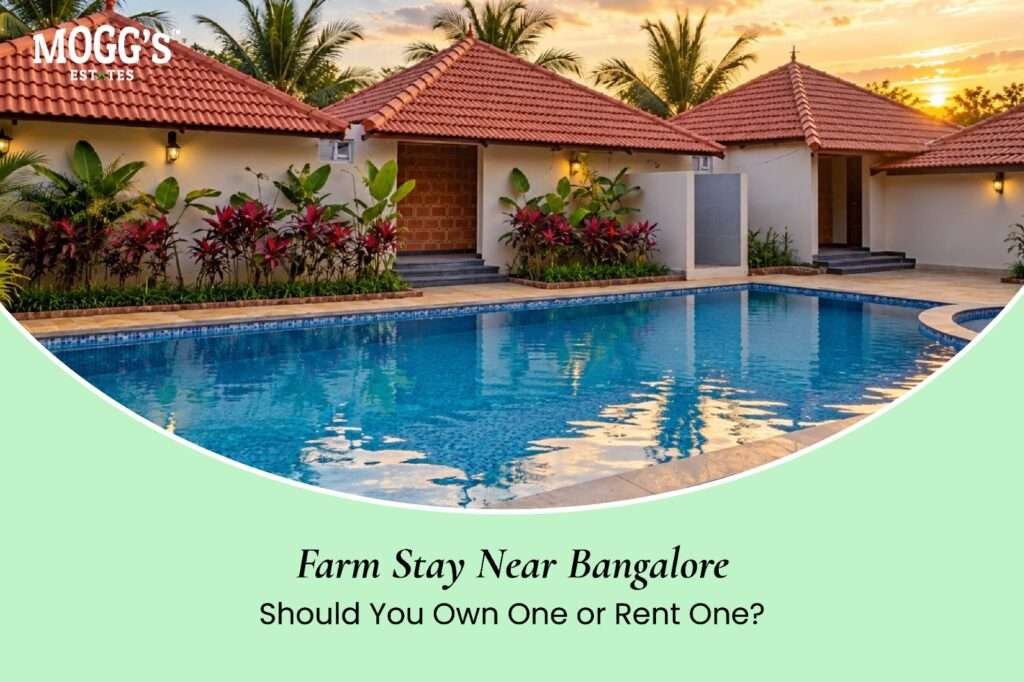
A farm stay is a place where guests spend the night on a working or landscaped farm. Accommodation can range from a simple cottage or tent to a full guest house. Some farm stays serve meals, offer walks through plantations, or provide activities such as cycling, birdwatching, or trekking.
The term covers very different arrangements. A family might rent a cottage for two nights. An owner might run a small property that hosts guests through the year. Costs, permissions, and risks change with each model, so identify the model before you compare options.
Why Farm Stays Near Bangalore Are in Demand
Bengaluru residents often want a break within a few hours’ drive. A farm stay offers green space, fresh air, and a slower pace without the cost of a longer trip. Families with children, and groups celebrating occasions, look for places with room to move.
Demand alone does not guarantee a business. Occupancy depends on distance, road access, quality, reviews, pricing, and the season. Treat demand as a reason to investigate, not as proof of returns.
Option 1: Renting a Farm Stay
Renting is the lower-commitment route. You book a property for a set period, pay a nightly rate or package price, and use the facilities the host provides.
Advantages of Renting
- Low upfront cost compared with buying land
- No responsibility for maintenance, staff, or approvals
- Easy to try different locations and styles before you decide
- Suitable for family events, short breaks, and group bookings
Disadvantages of Renting
- You do not own the property, so you cannot change it or build on it.
- Prices and availability can change.
- Your experience depends on the host’s standards.
- Cancellation and refund terms can be strict.
What to Check Before You Book
- The host’s registration, approvals, and guest licence, where required
- The exact location and drive time from Bengaluru at peak hours
- Water supply, power backup, and mobile coverage
- What is included, such as meals, activities, and transport
- Safety arrangements, including first aid and the nearest hospital
- Cancellation, refund, and damage policies, in writing
Option 2: Owning a Farm Stay
Owning gives you control of the property and any income from it. It also gives you the full set of responsibilities.
Advantages of Owning
- Long-term ownership of land and any approved structures
- Control over design, guest experience, and house rules
- A place you can use yourself on weekends and holidays
- Possible rental income, if the property is legally permitted for guest stays
Disadvantages of Owning
- The highest upfront cost, including land, registration, and construction
- Approvals and land conversion can take time and money
- Ongoing costs for maintenance, staff, utilities, insurance, and marketing
- Income depends on occupancy, which is often seasonal
- A specialised property can take longer to sell than a plain plot
Mogg’s Estates Projects: Each Considered Separately
The four projects below differ in size, location, and facilities. None of the project pages describes a registered guest-stay business. Where a project mentions camping, tent stays, or farmhouse construction, the page makes clear that the activity depends on approvals or on the project’s terms.
Aira Farms Phase I:
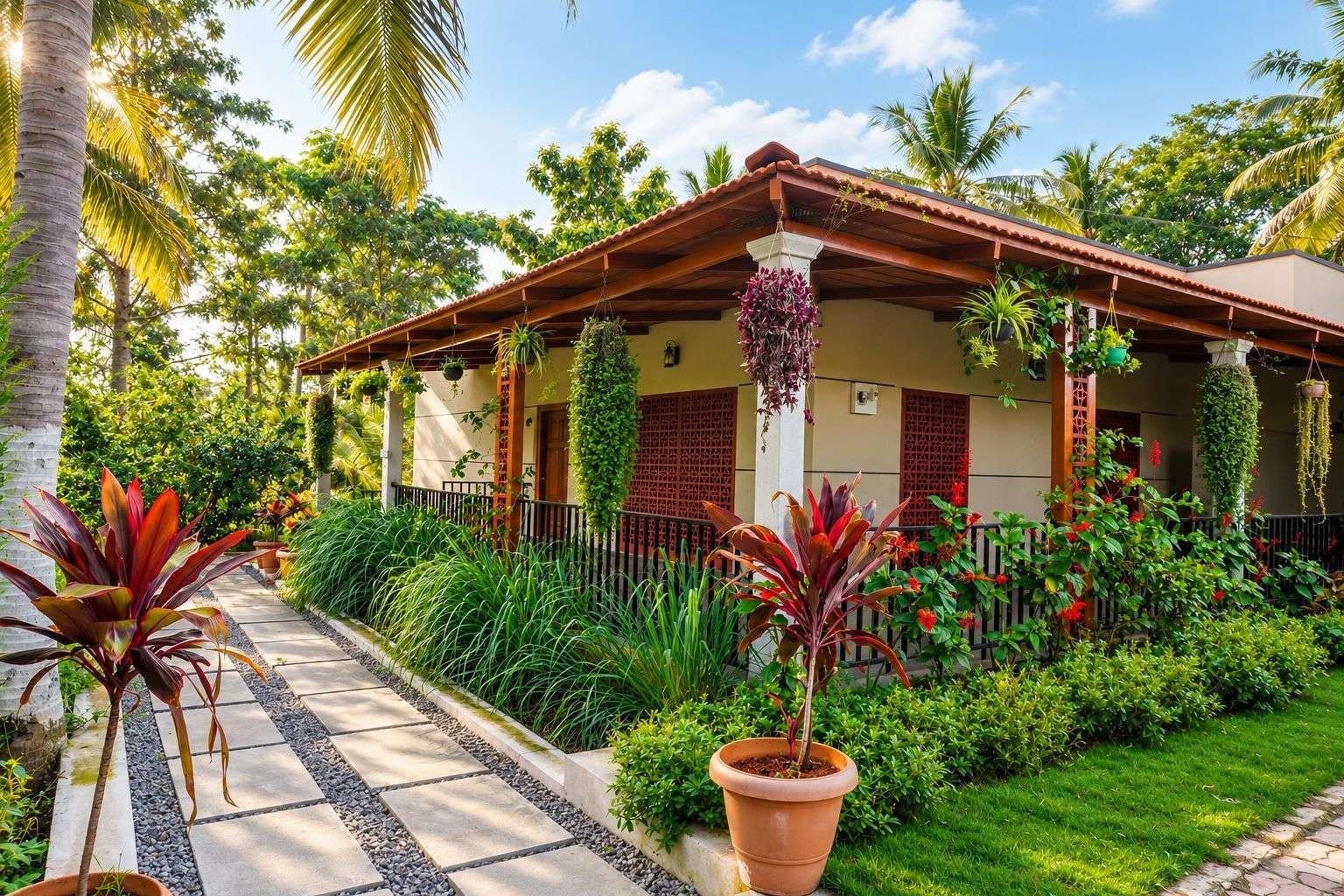
Overview: Aira Farms Phase 1 is a managed farmland project of about 20 acres of cultivated, productive agricultural land. The project page places it about 50 kilometres from Bangalore and close to Kanakapura. The land is surrounded by greenery and offers a hill view.
Plots and layout: The land is divided into individually marked farmland plots, and the project page states that plots start at about 6,500 square feet. Each plot has access to a dedicated water pipeline. The entire property has boundary fencing built from stone poles, cement poles, and barbed wire.
Water and infrastructure: The project includes a large water tank with a storage capacity of more than 25 lakh litres. Facilities listed include 24/7 security, borewell facilities, drip irrigation, water management, electricity, washrooms, and parking spaces.
Plantation: The page lists established coconut, mango, lemon, custard apple, chikoo, jackfruit, and arecanut trees, along with tomato as another crop. Four full-time farm workers are assigned to support plot care and ongoing maintenance.
Amenities: The project lists a clubhouse, swimming pool, badminton court, children’s play area, temple, kitchen, cowsheds, gazebo, and labour colony. Confirm which of these are complete and which are still planned.
Activities and stay position: The project page lists cycling, trekking, camping, farming, tent stays, and sapling plantation as outdoor activities. It does not state that the plot includes a registered guest stay. Ask the team to confirm the current position for guest accommodation before you plan around it.
Visiting: Schedule a visit through the Mogg’s Estates contact page, and confirm timings before travelling.
Aira Farms Phase II:
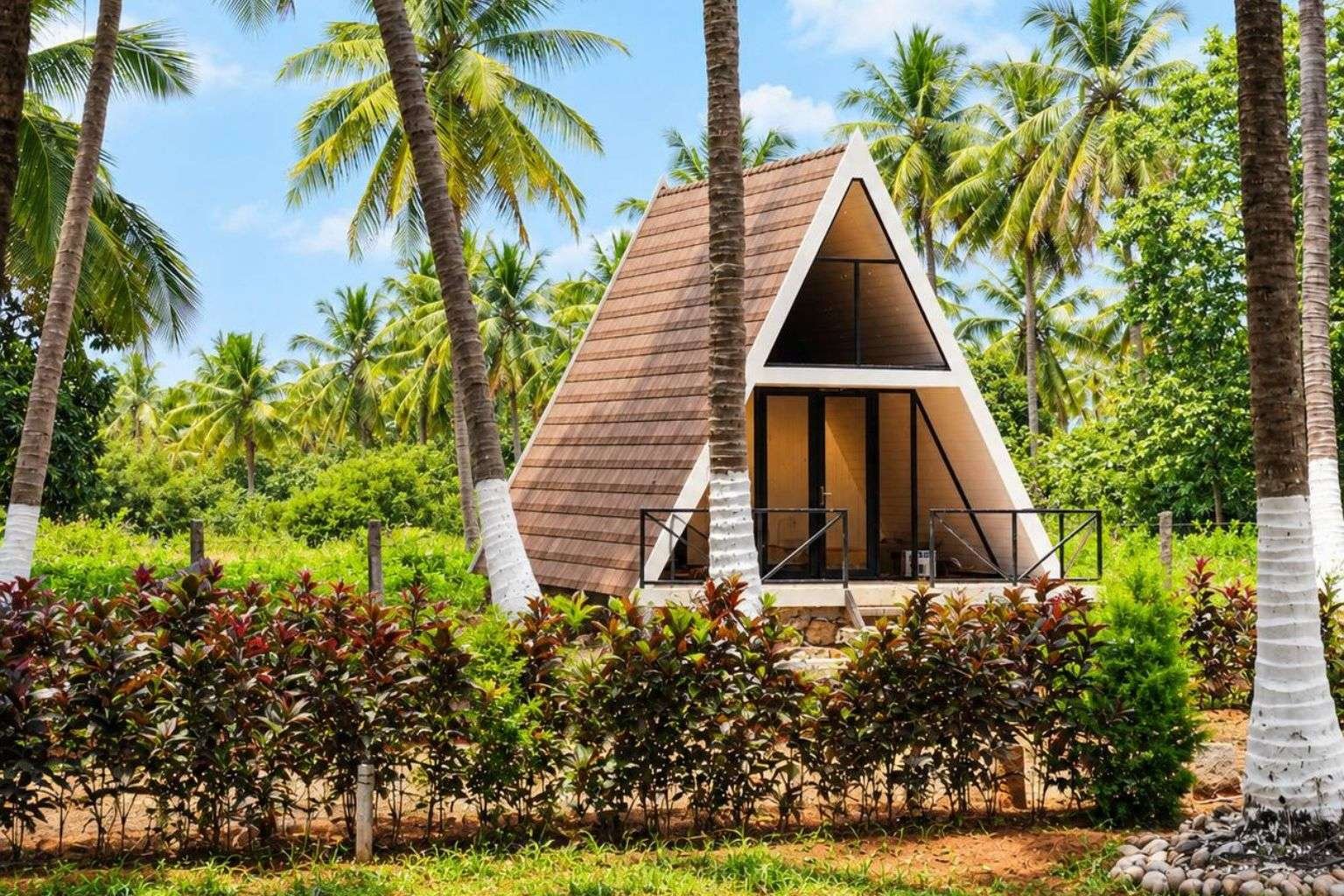
Overview: Aira Farms Phase 2 is a managed farmland project of about 7 acres of cultivated, productive agricultural land. The project page places it about 50 kilometres from Bangalore, with Kanakapura listed about 6 kilometres away. The farm is surrounded by greenery and has a hill view.
Plots and layout: The page states that plots start at about 6,500 square feet. Confirm the plot count and the plot layout from the current approved plan, since the page does not give a plot count.
Infrastructure: The page lists boundary fencing, lighting, restrooms, and a security house.
Amenities: The project lists a clubhouse, gazebo, labour colony, cowsheds, tennis court, children’s play area, and water tanks. Confirm which of these are built and which are planned.
Plantation: The page describes the farmland as having fruit-bearing and forest trees. It does not list individual species, so ask the team for the plantation plan for each plot.
Activities and stay position: The project page does not describe guest accommodation or a stay option. Confirm this with the team before you assume any stay facility exists.
Terrahill:
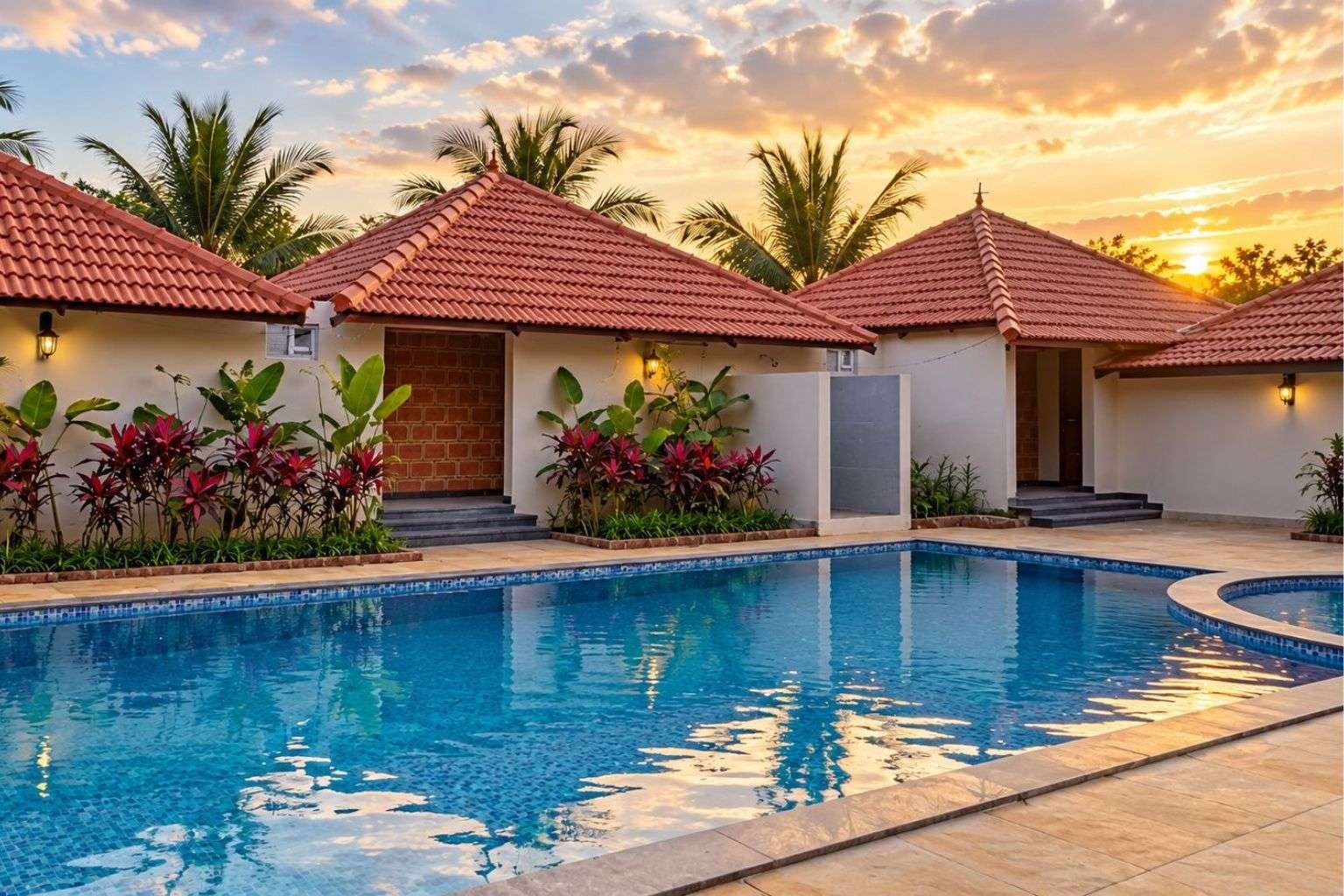
Overview: Mogg’s Terrahill is a 40-acre managed farmland project. The page describes it as a project with more than 100 farmland plots, surrounded by hills and dense plantations. It features a water stream on about 4 acres, supported by drip irrigation.
Location: The project page gives the location in two ways. It describes the site as near the Bengaluru–Mangaluru Expressway and roughly 45 minutes from Nelamangala and Kunigal. Its nearby locations list gives Bangalore as 85 kilometres away. Confirm the access route and the distance before you publish or quote either figure. Terrahill is also close to the Huthridurga fort, which is listed among nearby places to see.
Water and infrastructure: Each plot has a dedicated water pipeline, and the project includes a rainwater harvesting system. The water facilities listed include a borewell, drip irrigation, a bore recharge system, a water body, a motor house, and overhead tanks.
Plantation and staff: Four full-time workers are assigned to support plot maintenance and farm management.
Facilities: The project lists a clubhouse, swimming pool, badminton court, children’s play area, temple, kitchen, and cowsheds. It also lists farmers’ quarters, security quarters, an agronomist house, an agri storage house, and a parking lot.
Activities and stay position: The project lists camping sites, trekking trails, a bonfire area, a viewpoint, a cycling trail, and a forest garden. Its activities include tent stays. The page does not describe a registered guest-stay business. Camping and tent stays should be confirmed as permitted activities for the specific plots before a buyer relies on them.
Visiting: Schedule a visit through the contact page, and confirm visit timings before travelling.
Nidhivanaa Farms:
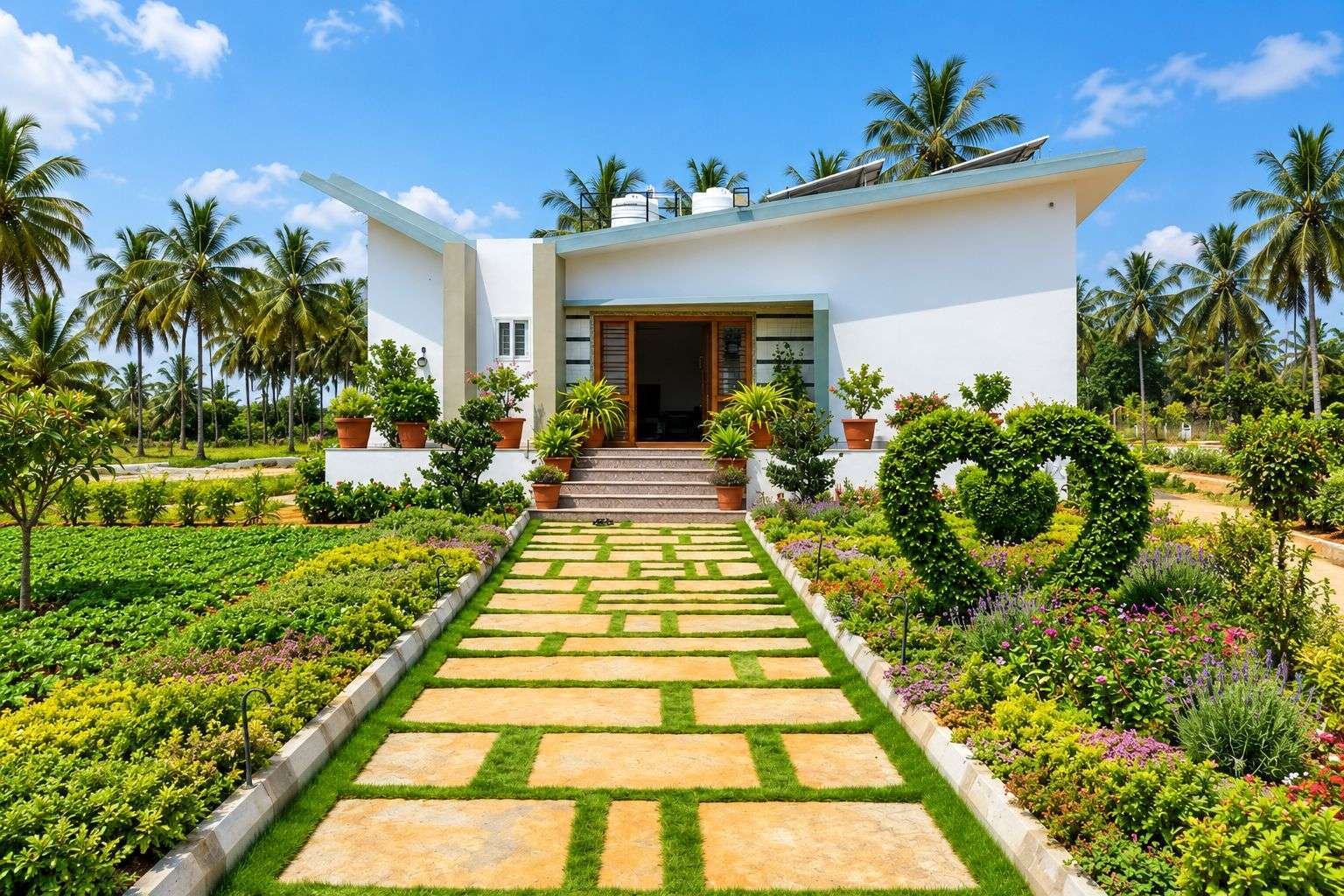
Overview: Nidhivanaa Farms is a managed farmland project in Hoskote, spread across 16 acres. The project page states that it is about 45 minutes from KR Puram. It has 72 farm plots, starting at about 6,500 square feet.
Farmhouse option: The page states that owners can use up to 10 percent of the plot area for farmhouse construction. This is subject to applicable approvals and project terms, so the farmhouse option is not a guest-stay permission.
Water and infrastructure: Each plot includes a borewell, drip irrigation, and plantation support, along with individual stone, cement, and barbed-wire fencing. The project also provides internal roads, 24/7 electricity, security, and a 24/7 water supply.
Plantation: The page states that each plot includes plantation and saplings. Confirm the species and the planting plan for each plot before you buy.
Amenities: The project lists a clubhouse, swimming pool, children’s play area, turf, indoor games, badminton court, bonfire zones, and an outdoor sitting area.
Ownership model: The page describes a “no revenue-sharing model,” which it explains as owners retaining the returns from their own farmland, subject to the project terms. Read the sale and management documents before you rely on this description.
Activities and stay position: The page does not describe a guest-stay business. Any guest use would depend on approvals and the project terms.
Visiting: Schedule a visit through the contact page, and confirm timings before travelling.
Project Comparison at a Glance
| Project | Location (per project page) | Land size | Plot sizes (per page) | Guest stay position |
|---|---|---|---|---|
| Aira Farms Phase 1 | About 50 km from Bangalore, close to Kanakapura | About 20 acres | From about 6,500 sq ft | Tent stays listed as an activity; no registered stay stated |
| Aira Farms Phase 2 | About 50 km from Bangalore, about 6 km from Kanakapura | About 7 acres | From about 6,500 sq ft | No guest stay stated |
| Terrahill | Near the Bengaluru–Mangaluru Expressway, about 45 min from Nelamangala and Kunigal | 40 acres | More than 100 plots (sizes to confirm) | Camping and tent stays listed as activities; no registered stay stated |
| Nidhivanaa Farms | Hoskote, about 45 min from KR Puram | 16 acres | From about 6,500 sq ft | Up to 10% of plot for farmhouse, subject to approvals |
Managed Farm Stays and Managed Farmland
Some buyers want the feel of a farm stay without running one. A managed farmland project can offer part of that model, with the operator handling plantations, maintenance, and security. Compare these arrangements carefully:
- Who owns the plot, and who keeps any income
- What the operator does, and what it charges for each service
- Whether guest stays or camping are permitted on the plot, and under which registration
- How often you receive reports, and what they contain
- What happens to the arrangement if the operator changes
A managed model reduces your workload, but it does not remove the legal checks. Land records, conversion status, and approvals must be verified whoever runs the stay. For the wider picture, see our guide to managed farmland near Bengaluru.
The Legal Foundation: Land, Approvals, and Guest Rules
Before you buy with a guest stay in mind, check three things.
Land classification: Agricultural land usually needs formal conversion before residential or commercial structures are built. A plot marketed for a farm stay may still be agricultural. Get the classification from the official revenue record.
Building permission: Converted land still needs approval from the local planning or municipal authority before construction. Guest accommodation is regulated more closely than a private farmhouse, so check the rules for that use specifically.
Guest-stay rules: Hosting paying guests may require registration or licensing under tourism, trade, or local rules. The requirements depend on the state, the district, and the type of stay. Confirm them before you accept bookings.
For the conversion and approval steps in more detail, read our guide on the RTC land record in Karnataka and our land due diligence checklist.
Cost Comparison: Owning vs Renting
Costs differ so much between properties that a single figure would mislead you. Use the framework below to compare your own options.
| Cost area | Renting | Owning |
|---|---|---|
| Upfront purchase | None | Land, stamp duty, registration, legal fees |
| Construction or upgrades | None | Building, approvals, utility connections |
| Maintenance | Covered by the host | Your responsibility |
| Staff and housekeeping | Covered by the host | Your responsibility |
| Insurance | Usually covered by the host | Your responsibility |
| Marketing and bookings | Usually covered by the host | Your responsibility |
| Flexibility | Limited to the stay | Full control within approvals |
Build a simple annual budget for each option. Include every cost above, plus the value of your own time if you plan to manage the property yourself.
Income From a Farm Stay: What to Expect
Guest income is uncertain. It depends on distance from Bengaluru, road access on the day, quality, reviews, pricing, competition, and season. Weekends and holidays usually perform differently from weekdays.
Be cautious with any projection that does not show its assumptions. Ask for occupancy rates, average nightly price, costs, and the source of each figure. Compare them with the actual performance of similar properties, not with a best-case scenario.
Income is not profit. After operating costs, staff, utilities, marketing, and maintenance, the net result may be much smaller than the gross figure suggests.
How to Decide: Five Questions
- How often will I use it? If you will visit only a few times a year, renting may suit you better.
- Do I want guest income? If yes, confirm the legal permission and a realistic occupancy level first.
- How much time can I give? Owning a guest property takes more time than most people expect.
- What can I afford to hold? Include the cost of keeping the property through slow seasons.
- Can I verify the land? Without clear title, classification, and approvals, neither option is safe.
Warning Signs in Farm Stay Offers
- A farm stay marketed on a plot that is not legally permitted for guest use
- Income promises with no occupancy data or cost breakdown
- Pressure to book or pay before approvals are confirmed
- Unclear cancellation or refund terms
- A host who cannot show registration or safety arrangements
- Photos or amenity lists that do not match the site you visit
Practical Checklist Before You Own or Rent
- Confirm the land classification and any conversion order.
- Confirm building and guest-stay approvals in writing.
- Check the title, encumbrances, and revenue records for any property you plan to buy.
- Confirm which amenities are built, and which are planned.
- Visit at least once in the monsoon and once in the dry season.
- Test the drive at peak hours.
- Ask for written terms on cancellation, damage, and safety.
- Budget for the full annual cost, not just the purchase price.
Key Takeaways
- A farm stay near Bangalore can be a weekend retreat or a small business, depending on how you use it.
- Renting offers flexibility and low commitment. Owning offers control and long-term use, with higher costs and responsibilities.
- Guest use depends on land classification, building approval, and guest-stay registration.
- Aira Farms Phase 1 (about 20 acres), Aira Farms Phase 2 (about 7 acres), Terrahill (40 acres), and Nidhivanaa Farms (16 acres) differ in size, location, and facilities.
- Nidhivanaa allows farmhouse construction on up to 10 percent of a plot, subject to approvals. None of the four pages describes a registered guest-stay business.
- Verify the land, the amenities, and the approvals before you commit, whether you buy or rent.
FAQs:
Is it better to own or rent a farm stay near Bangalore?
It depends on how often you will use the property, whether you want guest income, and your budget. Renting suits occasional visits. Owning suits long-term use or a planned business, once the legal position is confirmed.
Can I run a farm stay on agricultural land in Karnataka?
Usually not without the right land classification, building approval, and guest-stay registration. Confirm each requirement for your specific plot before you plan anything.
Can I visit Aira Farms Phase 1 and Terrahill?
Yes. Contact Mogg’s Estates to arrange a visit and to confirm timings before you travel.
Does Nidhivanaa allow a farmhouse on my plot?
The project page says owners can use up to 10 percent of the plot area for farmhouse construction, subject to applicable approvals and project terms. Confirm the approval position in writing before you plan construction.
How much does a farm stay earn?
Income varies widely with location, quality, occupancy, pricing, and season. Ask for the assumptions behind any projection, and compare it with the actual performance of similar properties.
Do farm stays need a licence?
Guest accommodation may require registration or licensing under local or state rules. Confirm the requirement with the relevant authority.