On most weekday mornings in Bangalore, the city wakes up to the sound of alarms, traffic, and tight schedules. People rush to offices, check emails before breakfast, and spend hours navigating busy roads. For many professionals, life begins to feel like a cycle, salary slips arrive every month, but peace of mind seems harder to find. It was during one such busy phase that several families began asking themselves a simple question: Is wealth only about money, or is there something more meaningful to invest in?
For many of them, the answer surprisingly came from the soil.
A few years ago, a young couple working in the tech industry decided to spend a weekend exploring farmland near Bangalore. What started as a casual visit soon turned into a life-changing discovery. They were introduced to the concept of managed farmland, something they had never seriously considered before. Unlike traditional farming, where owners must personally manage crops and labour, managed farmland allows investors to own agricultural land while experts manage cultivation, maintenance, and long-term development.
At first, they were sceptical. After all, most people are familiar with real estate or stock market investments, but farmland felt unfamiliar. Yet as they walked through rows of mango trees and looked out at the calm landscape stretching beyond the horizon, something felt different. The air was cleaner, the pace was slower, and the idea of owning a piece of living land suddenly felt meaningful.
That moment marked the beginning of their farmland story.
Across Bangalore, similar stories are unfolding. Professionals, entrepreneurs, and families are slowly discovering the potential of premium managed farmland. Unlike apartments or commercial properties, farmland offers something deeper than financial returns: connection. The connection to nature, to food, and often to the values that previous generations once understood very well.
One of the biggest reasons for this growing interest is the concept of managed farmland projects developed by companies like Mogg’s Estates. These projects are designed specifically for modern investors who love the idea of owning farmland but do not have the time or expertise to manage it themselves. Everything from soil preparation and crop selection to irrigation systems and plantation management is handled by professionals. Investors can visit their land whenever they want, enjoy the green surroundings, and still benefit from long-term agricultural value.
For many families, this approach removes the biggest barrier to farmland investment: complexity.
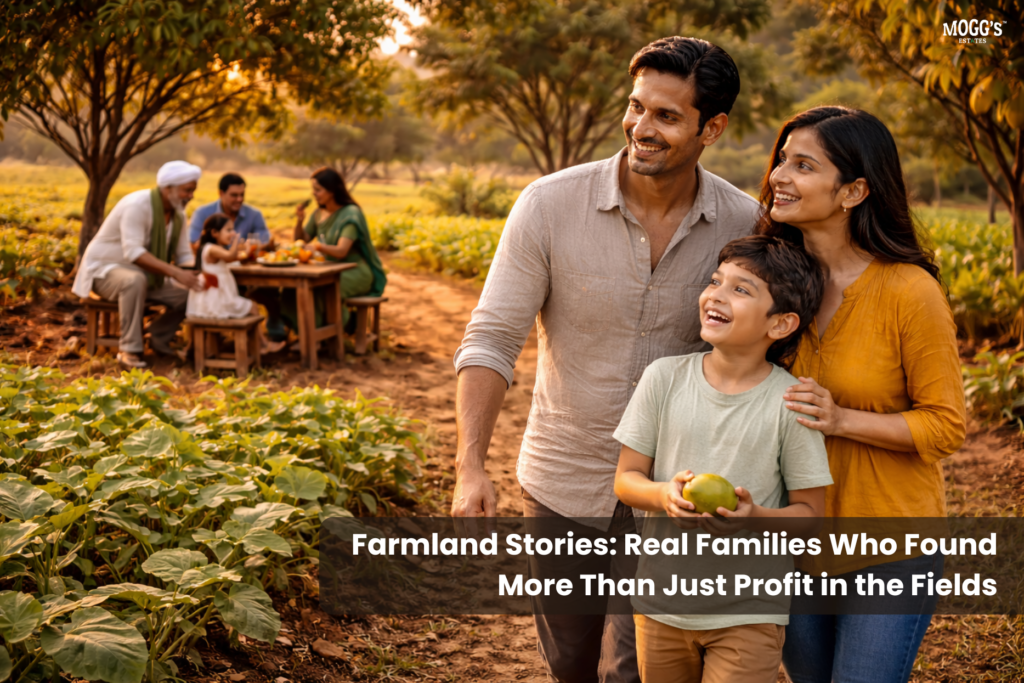
Consider another story. A retired couple from Bangalore spent decades saving through conventional investments. Stocks provided returns, and property provided stability. But when they visited one of the best farmlands near Bangalore, they realized something interesting. Their grandchildren, who were used to city life and screens, suddenly became curious about trees, soil, and fruits growing naturally. A simple walk through an orchard turned into a learning experience for the entire family.
That was when the couple realized that farmland was not just an asset; it was an experience.
Unlike most urban investments, farmland evolves in visible and meaningful ways. A small sapling planted today grows into a strong tree that provides fruit, shade, and environmental value for decades. Watching this transformation creates a sense of patience and satisfaction that typical financial investments rarely provide.
This is one reason why managed farmland near Bangalore is gaining popularity among new-age investors. Bangalore is known as India’s technology capital. Still, it is surrounded by fertile agricultural regions that support a variety of plantations, including mangoes, coconuts, chikku, and other fruit-bearing trees. When farmland is developed thoughtfully, it becomes a balanced blend of agriculture, sustainability, and investment.
Companies like Mogg’s Estates focus on building such ecosystems. Instead of treating farmland purely as a commodity, these projects are designed to nurture healthy soil, sustainable farming practices, and long-term land value. Proper irrigation, tree plantation, and professional farm management ensure that the land remains productive and environmentally responsible.
For families investing in these projects, the benefits go beyond numbers.
One entrepreneur who invested in premium managed farmland near Bangalore shared an interesting perspective. He said that owning farmland changed the way he thought about wealth. In the corporate world, success is often measured by quarterly profits and rapid growth. But farmland teaches a different lesson: patience. Crops grow slowly, seasons change gradually, and returns often come after consistent nurturing.
In a way, farmland encourages people to slow down and appreciate long-term value.
Another fascinating aspect of farmland investment is its emotional impact. Many urban families today feel disconnected from their roots. Previous generations often grew up in agricultural communities, in village life, or in land-owning households. But rapid urbanization has changed that relationship. Managed farmland offers a chance to reconnect with those traditions in a modern, convenient way.
Imagine visiting your own farmland on a weekend. The air smells fresh after morning irrigation, birds move between rows of trees, and the ground beneath your feet feels alive. For city dwellers used to concrete landscapes, such experiences create a powerful sense of calm. Children learn where food truly comes from, while adults rediscover the beauty of natural growth cycles.
These moments are what make farmland stories special.
Financially, too, farmland has begun attracting investors seeking diversification. While urban real estate markets fluctuate and stock markets experience volatility, agricultural land often follows its own growth patterns. Land scarcity around expanding cities like Bangalore can also increase long-term value, especially when projects are located in developing agricultural zones.
This combination of tangible land ownership, environmental value, and potential appreciation makes managed farmland an attractive option for many modern investors.
However, choosing the right project is extremely important. Not all farmland developments are equal. Investors must ensure that the land has clear legal documentation, proper agricultural planning, and professional management support. This is where established developers such as Mogg’s Estates play a crucial role. By focusing on transparent ownership structures and sustainable farming models, they help investors experience farmland without unnecessary complications.
Their approach has helped many families confidently step into farmland ownership.
Today, when these families visit their farms, they often realize that the real reward is not just financial growth. It is the feeling of owning something that grows, breathes, and contributes positively to the environment. Trees planted today will produce fruit tomorrow, enrich soil health, and potentially benefit future generations.
In a world where most investments exist only as numbers on a screen, farmland offers something real.
It offers soil beneath your feet, shade from trees you planted, and stories that your children and grandchildren will remember.
And perhaps that is why more people are beginning to look beyond traditional investments and explore managed farmland near Bangalore. With thoughtfully developed projects and expert management, owning farmland no longer requires farming expertise. Instead, it becomes a meaningful blend of lifestyle, sustainability, and long-term vision.
For many families working with Mogg’s Estates, this journey has already begun. What started as a simple investment decision gradually became something much more personal, a legacy rooted in nature.
Because in the end, farmland is not just about crops or profits.
It is about the stories that grow with the land.