Investment
Market analysis, tax benefits and why farmland belongs in every smart portfolio.

India’s Agriculture Investment Story Gets Bigger in 2026 as Farm Infrastructure Attracts ₹1.33 Lakh Crore
India’s agriculture sector is increasingly becoming an important part of the country’s broader investment story. New government data released in June 2026 shows that public spending, farm infrastructure and private participation are helping agriculture move beyond traditional crop production.


More in Investment

Indian Family Office Assets Set to Grow 1.5x as Investors Shift Towards Alternative Assets
India’s family office ecosystem is entering a new phase as wealthy families increasingly look beyond traditional investments. A new Julius Baer–EY report estimates that Indian family office assets could grow by 1.5 times over the next three years. The report highlights a wider shift in how India's wealthy investors manage and deploy capital. Family offices are becoming more active in private markets, technology-led sectors and alternative assets.

Accel Raises $550 Million India Fund as Investors Back the Next Wave of Startups
India's startup investment landscape is seeing another major vote of confidence. Global venture capital firm Accel has raised $550 million for its ninth India-focused early-stage fund, as investors continue to look for opportunities in artificial intelligence, fintech, consumer technology and advanced manufacturing. The fund was announced on August 11, 2026, as part of Accel's wider $3.5 billion global fundraising across four investment vehicles.

Global Investors Put $2 Billion Behind India’s Infrastructure Future
India's infrastructure story is attracting fresh attention from global investors. The National Investment and Infrastructure Fund (NIIF) has secured $2 billion in commitments from international and domestic investors for its second infrastructure fund. The amount represents more than half of the fund's $3.2 billion target. The development is significant because the fund plans to invest in some of India's most important growth areas, including energy, transportation and digital infrastructure.
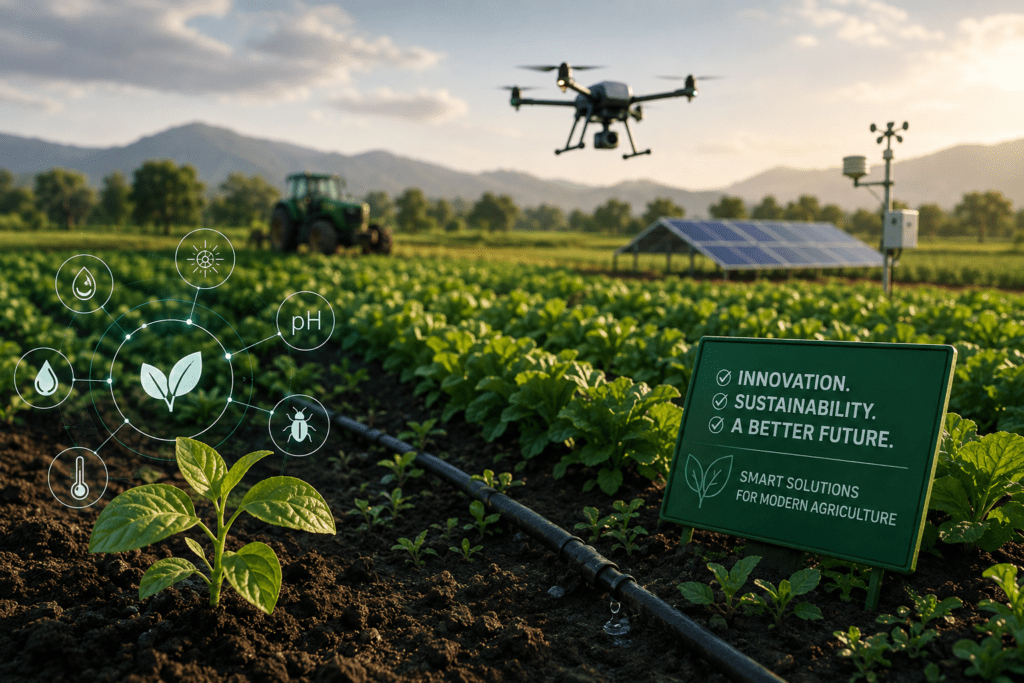
India’s Agriculture Enters a New Innovation Era as ICAR Pushes Science from Lab to Farm
New Delhi, August 20, 2026: India’s agricultural sector is entering a new phase where technology, climate resilience and scientific research are becoming central to the future of farming. At the 97th Annual General Meeting of the Indian Council of Agricultural Research (ICAR), held in New Delhi on August 18, policymakers and agricultural scientists outlined a stronger focus on turning research into practical solutions for farmers.
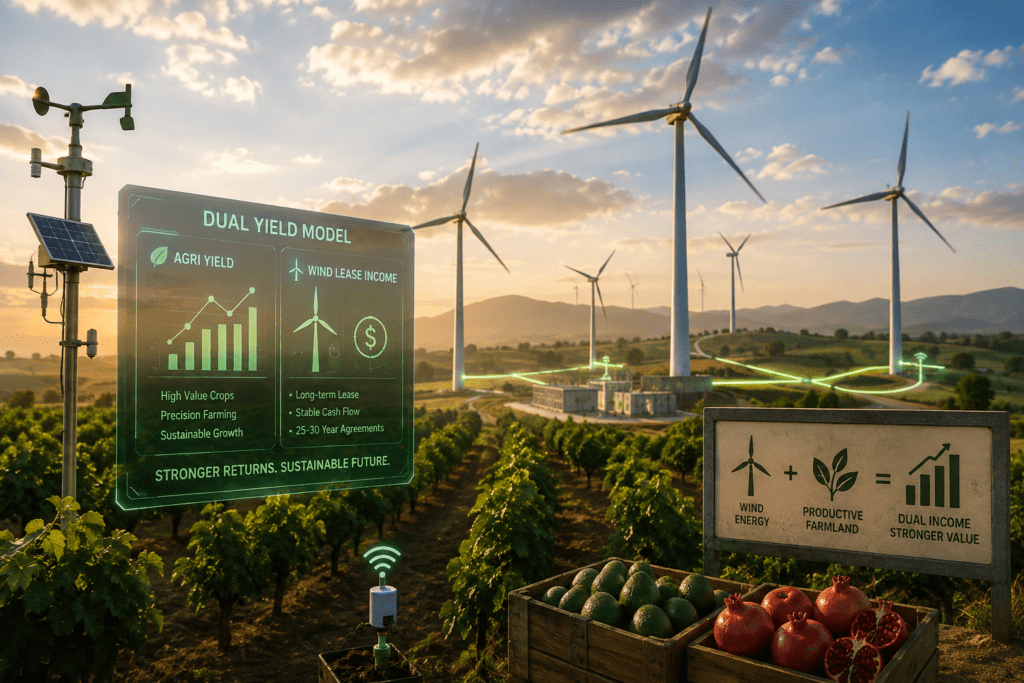
India’s Wind Energy Expansion Could Create a New Opportunity for Managed Farmland
India's renewable-energy transition is changing the way rural land is viewed. Agricultural land has traditionally been valued for its farming potential, water availability and long-term appreciation. But in regions with strong renewable-energy resources, another factor is becoming relevant: the potential for land to support energy infrastructure alongside agriculture. India's wind sector has expanded significantly over the past decade. According to the Ministry of New and Renewable Energy, the country had about 57.44 GW of installed wind power capacity by June 30, 2026, compared with roughly 21 GW in 2014.

Sugar Stocks Rally as India’s Sugar Prices Hit Seven-Year High
Indian sugar stocks have moved sharply higher this week as domestic sugar prices climbed to a seven-year high, drawing fresh attention from equity investors to the sugar and agricultural sector.

India’s Agriculture Markets Enter a New Phase as Commodity Trading and Farm Investment Gain Momentum
India’s agriculture sector is seeing growing attention from commodity markets and investors as weather risks, food demand and new financial products reshape the outlook for farm-linked businesses.
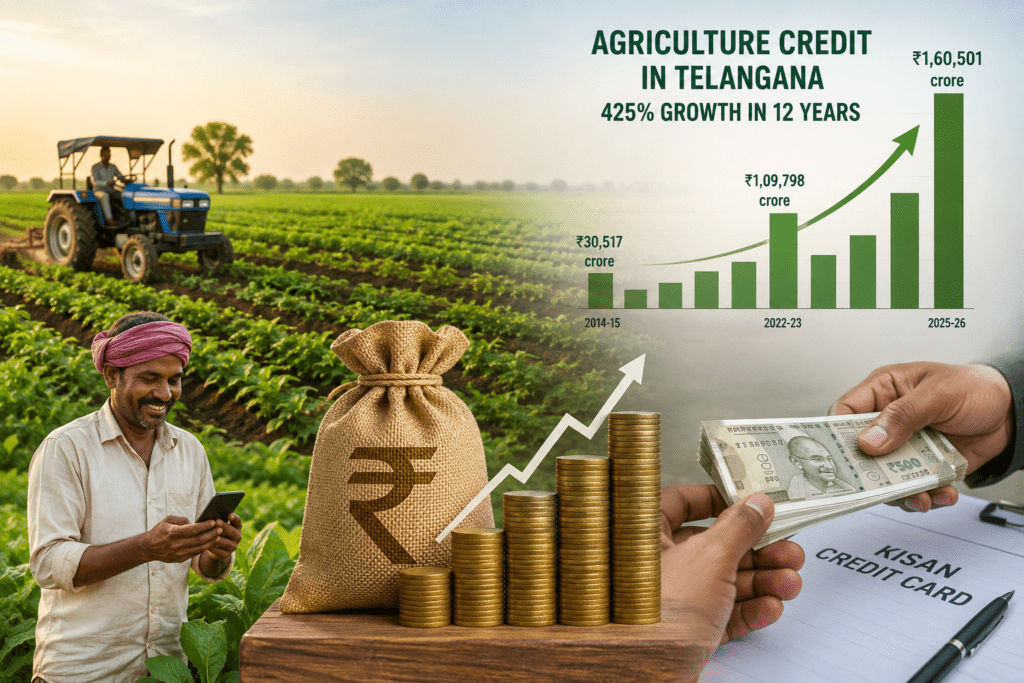
Telangana Agriculture Credit Surges 425% in 12 Years as Farm Investment and Mechanisation Rise
Agricultural credit disbursement in Telangana has increased by around 425% over the past 12 years, reflecting a sharp rise in the amount of formal financing flowing into the state's farming sector. According to information provided by the Ministry of Finance in Parliament, agriculture loans in Telangana increased from ₹30,517 crore in 2014–15 to ₹1,60,501 crore in 2025–26. The state recorded its highest annual agricultural credit disbursement of ₹1,64,908 crore in 2024–25.

AI Could Reshape Farm Lending as SBI Pushes Technology Towards Rural Credit
SBI Chairman CS Setty says artificial intelligence could expand credit access for farmers and rural India by improving farm-level decisions, risk assessment and lending.
